
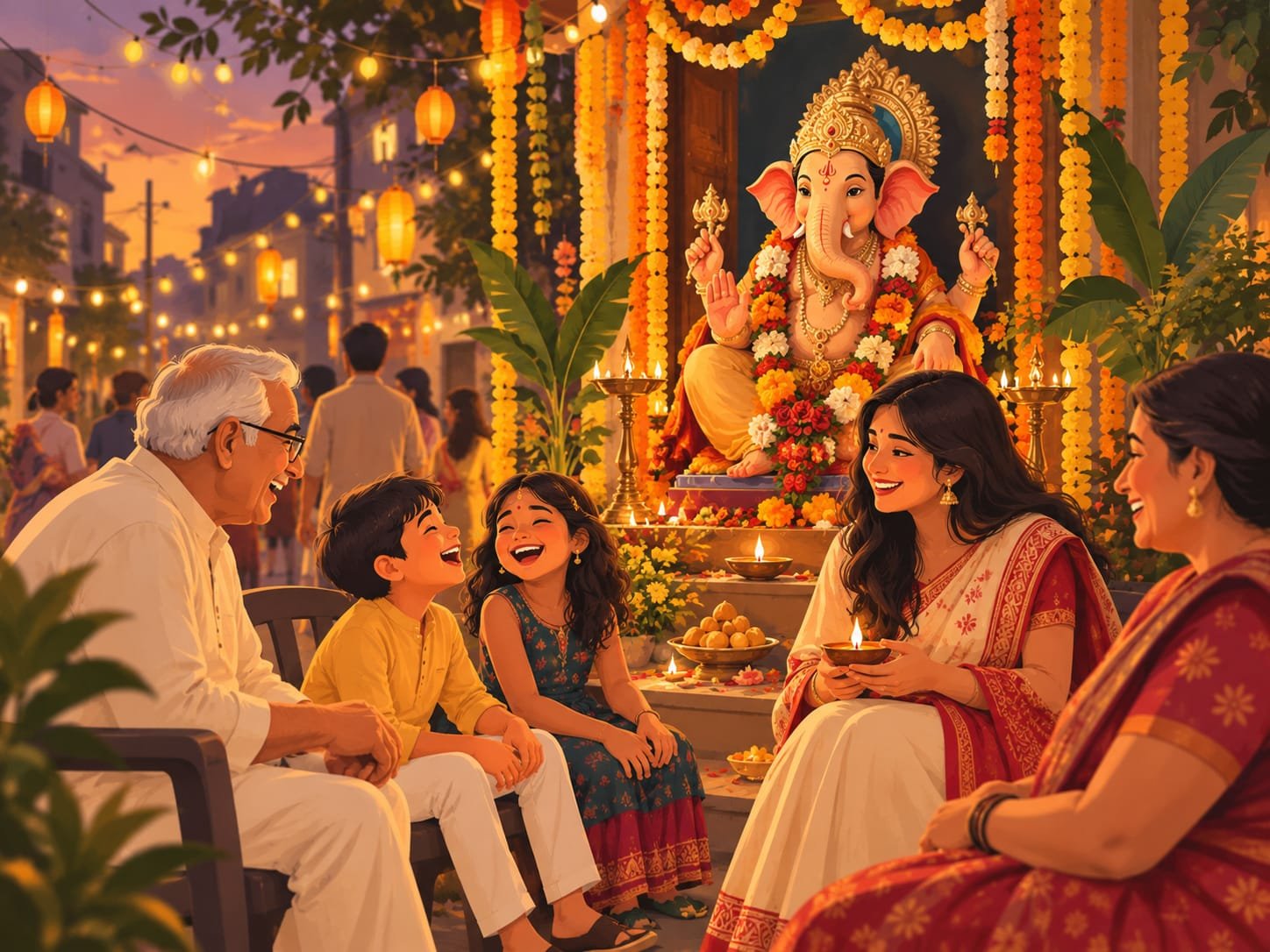
There’s a specific sound that tells you the festival has arrived before you even see a single idol. It’s the sound of someone testing the dhol two streets away, a slightly off-beat drumroll that makes half the colony peek out of their balconies at once. That’s it. That’s the unofficial start of Ganesh Chaturthi in my neighbourhood.
For the other 355 days of the year, we’re fairly normal neighbours. We nod in the lift, we complain about the water supply, we pretend not to notice whose car is blocking whose gate. And then, like clockwork, this one festival shows up and quietly dissolves all of that.
Why We Actually Celebrate Ganesh Chaturthi
Before I get carried away with nostalgia, here’s the short version for anyone who’s never quite known the “why” behind the “what.”
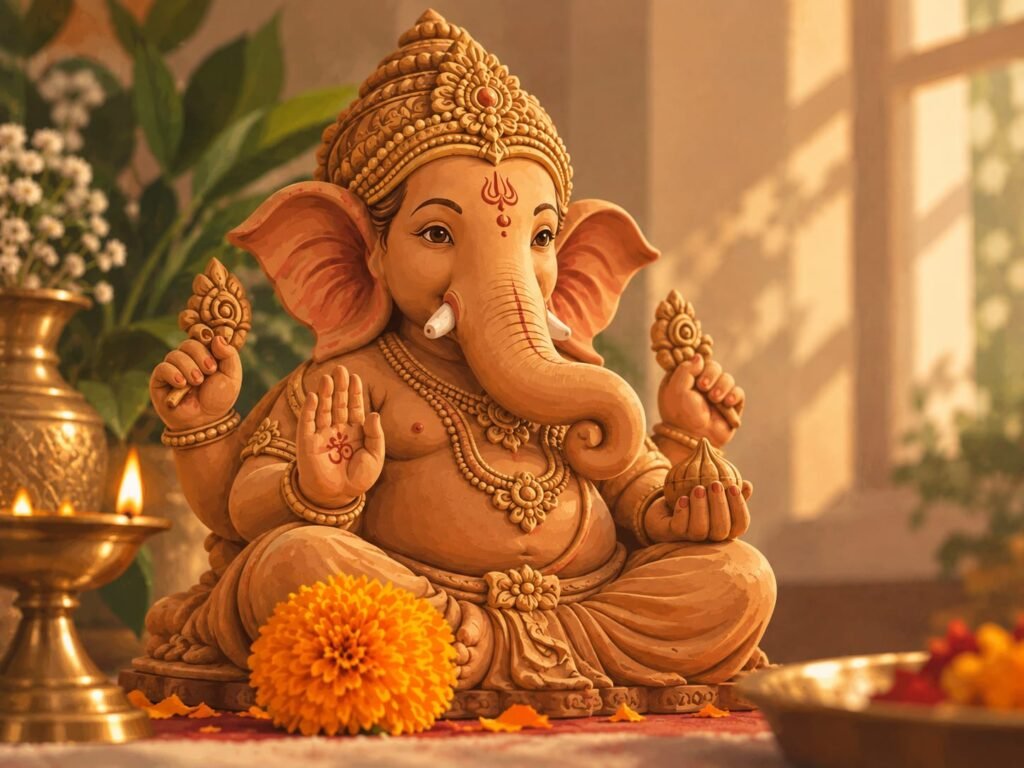
Ganesh Chaturthi marks the birthday of Lord Ganesha, the elephant-headed god of wisdom, new beginnings, and the remover of obstacles. According to legend, Goddess Parvati created him from turmeric paste (some versions say sandalwood) to guard her home while she bathed, and Lord Shiva, not recognizing him, famously did not react well to being blocked resulting in a mix-up that’s a whole story in itself. Ganesha was eventually revived with an elephant’s head, and ever since, he’s been the god people turn to before starting anything new: a business, a wedding, an exam, a house.
The ten-day celebration itself, ending in Anant Chaturdashi with the idol’s immersion, is a relatively modern addition. It was Lokmanya Tilak who, in the late 1800s, turned what used to be a quiet, private household ritual into a grand public festival partly to unite people across caste and class under British rule, using devotion as a cover for community organizing. More than a century later, the politics has faded, but the “let’s all get together” spirit stuck around.
And That’s Exactly What Still Happens
The moment the first idol arrives on someone’s balcony, an unspoken rulebook kicks in. Someone’s uncle takes charge of the sound system. Someone’s mother starts a prasad rotation that nobody remembers signing up for but everyone contributes to. The kids who’ve been silently feuding over a badminton court dispute since March are suddenly co-managing the aarti thali because an adult handed them one each and walked away. I’ve watched a retired schoolteacher argue passionately with a 19-year-old about which bhajan to play next, and somehow both walk away feeling like they won. I’ve eaten modaks from at least six different households in one evening because refusing prasad is apparently a bigger social crime than skipping the aarti itself.
There’s something almost funny about how a ten-day deadline does what a hundred WhatsApp group messages about “let’s have a get-together sometime” never manage to do. The visarjan procession on the last day is proof of this in its most literal form people who barely exchange two words in the elevator end up shoulder to shoulder, shouting “Ganpati Bappa Morya” at the top of their lungs, throwing gulal in the air, walking half the neighbourhood together behind a truck carrying an idol that, by evening, will be gone.
The Bit Nobody Says Out Loud
I think what actually makes these ten days different isn’t the rituals it’s the permission they give us. Permission to knock on a neighbour’s door uninvited. Permission to sit on someone else’s staircase and eat off a paper plate. Permission to be a little loud, a little messy, a little too invested in whether the idol this year is bigger than last year’s.
By the time the drums fade out and the last idol disappears into the water, the “normal” neighbourly distance quietly creeps back in. But for those ten days, we’re not really neighbours. We’re something closer to family the loud, chaotic, borrowed sugar and borrowed speakers kind.
And honestly? I look forward to that every single year.