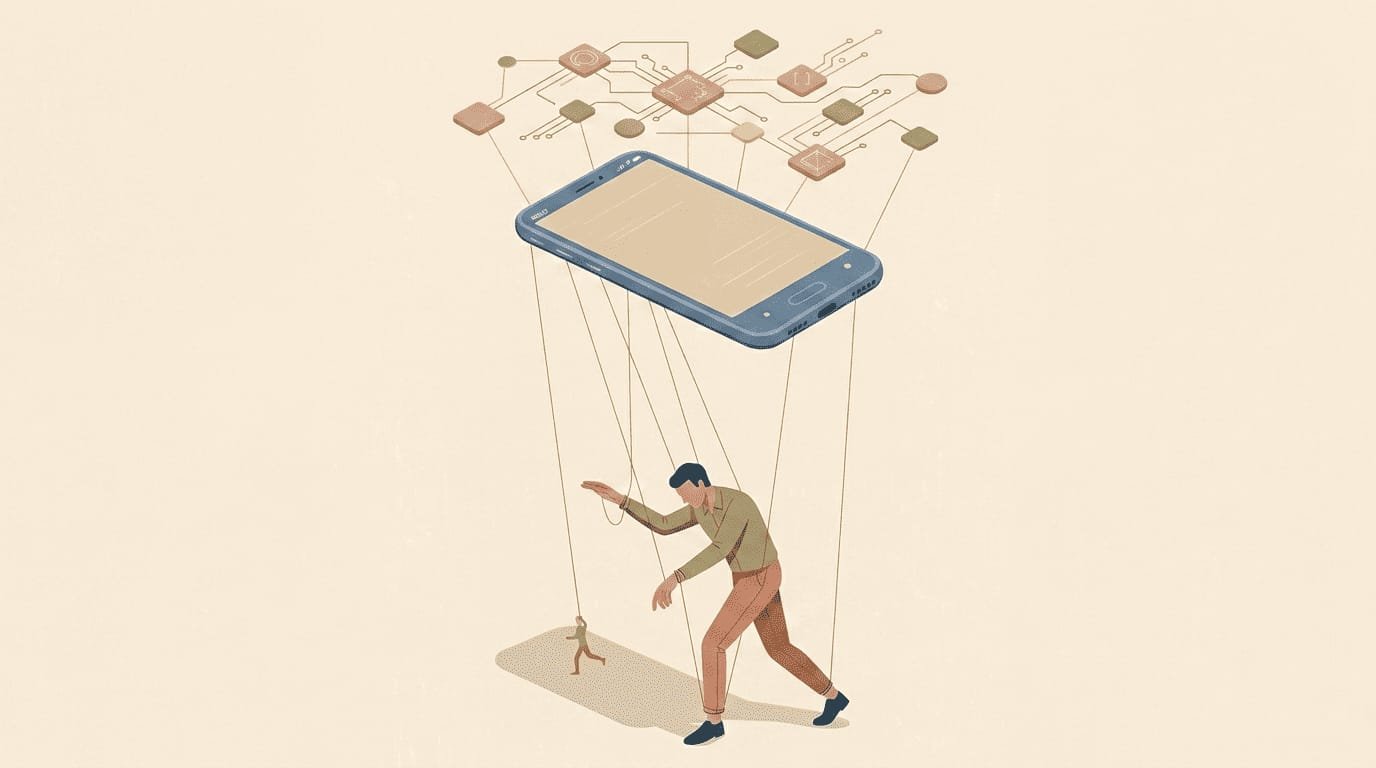
When you open Instagram, YouTube, or X – it doesn’t matter what for, but hours pass by, and you’re still glued to the screen. Have you ever wondered who decides what shows up first on your feed, or how you get the exact reels, posts, or videos that hit exactly that emotional spot?
It feels random, as if someone is literally waiting for us to scroll and BOOM! There is a relatable reel stating a heartbreaking quote, and you’re deciding whether to like it or not. It feels like “that’s just what’s trending.”
But it’s not random. And definitely it’s not magic.
Its design.
In 2025, more than 5.4 billion people used social media. That’s more than half the planet. And every single one of those people sees a different version of the internet. Not because they chose it carefully, but because an algorithm chose it for them.
Now, if the algorithm chooses what we see…who chooses how the algorithm works?
Imagine your social media app is a really smart librarian.
You walk into a giant library with billions of books. The librarian watches what you pick up. If you read comic books, next time they bring you more comics. If you read scary stories, they will give you more scary stories.
She doesn’t care if the story is good or bad. She only cares about one thing: Did you keep reading?
That’s how social media works.
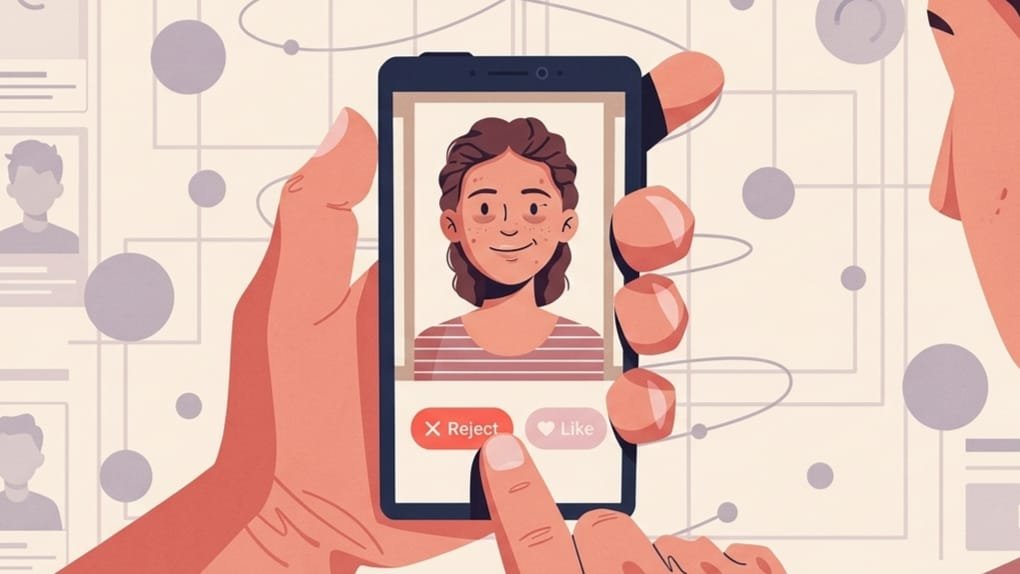
The platform watches, analyses, what you like, what you comment on, what you watch until the end, what you argue about, and what you pause on. And then it says: “Oh, you reacted to this? Here’s more.” Your feed is sorted by scores, from highest to lowest, based on the likelihood that you are expected to interact with it.
It doesn’t know whether you loved it or hated it. It just knows you reacted, and it will do anything to feed you more.
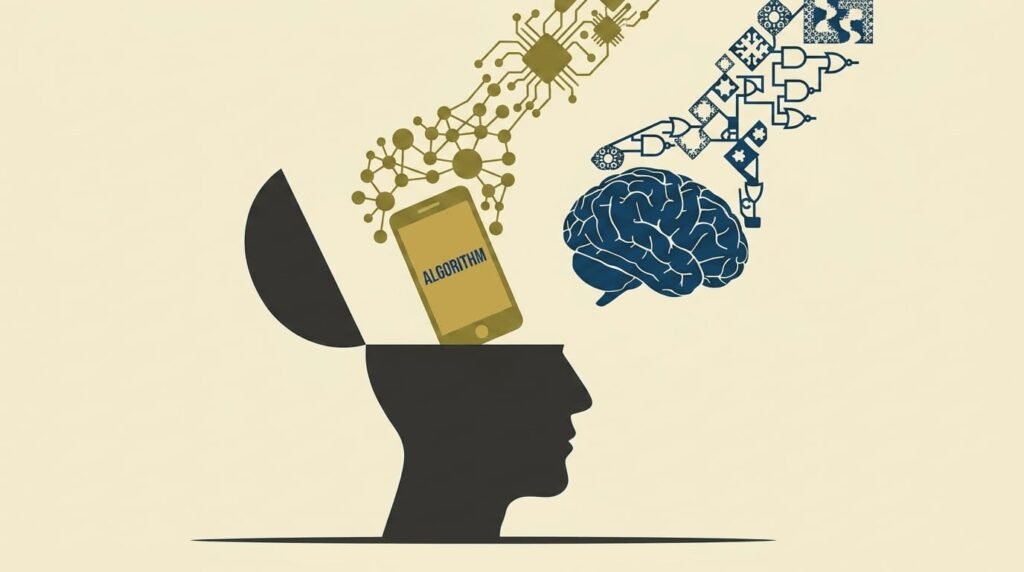
But here’s where it gets uncomfortable and darker. Did you know that the negative content or angry content is pushed more?
A whistleblower by Frances Haugen, a data scientist who worked at Facebook as a product manager on the Civic Integrity team, revealed how Facebook’s algorithm leveraged “meaningful social interactions” on the platform by incentivizing divisive posts and misinformation. False or misleading stories can spread much faster than accurate ones because emotional content makes people react more.
Anger makes you comment, shock makes you share, and fear makes you watch until the end. And the algorithm sees that reaction and thinks: “This works.”
It doesn’t understand truth or lies, good or bad. It only wants your attention.
Even fact-checking systems struggle because corrections often spread more slowly than the original post. By the time something is labeled false, millions may have already seen it. A recent example of this was how, at the start of January 2026, New Delhi was gripped with a fear of increased kidnappings. Social media picked it up, calling it the work of an insidious cult, among other exaggerated claims. News channels too picked up the story fast, until it all turned out to be a big hoax. Yes, over 800 people were reported missing in the city, but if one were to compare it to the number of the previous year, this data was much lower.
So no, companies don’t usually sit around planning to make people angry or fearful. But when anger keeps people scrolling… the system naturally pushes it.
There is a giant button labeled “Make This Go Viral.”
Which allows the platform to:
- – Boost certain features
- – Change ranking priorities
- – Adjust how much visibility a format gets
- – Test which content types get more reach
And if you are an advertiser who pays more than enough, you might be able to get dangerous content on the feed with personalized moderation. All you have to do is be in a group called “P95 spenders” and spend more than $1,500 per day, and you’ll be “exempt from advertising restrictions” and privileged to “manual human review”.
They know you are the best product in every market. It’s about time you realize the same.
How to Get Out of This Loop?
The only way you can save yourself from being the ideal product is to use social media sparingly.
In 2025, companies spent around $276 billion on social media ads. Not a million. Billion.
Why?
Because platforms are very good at keeping people inside their apps. The average person spends about 2 hours and 20 minutes per day on social media. Gen Z? Nearly 3 hours daily.
That level of attention is extremely valuable for an advertiser. The longer you stay, the more ads you see. The more ads you see, the more money platforms make.
So the algorithm’s main job isn’t to inform you. It’s to keep you. And the only way to win over it is to refuse the invitation.
You can create alarms for social media use. Fact-check negative or political news before re-sharing it. Even questioning the legitimacy of the source can save you from falling into a rabbit hole of conspiracies and misinformation that can shape your perceptions without you even realizing it
Once you understand how the system works, you scroll a little differently.
And sometimes, that’s enough.