
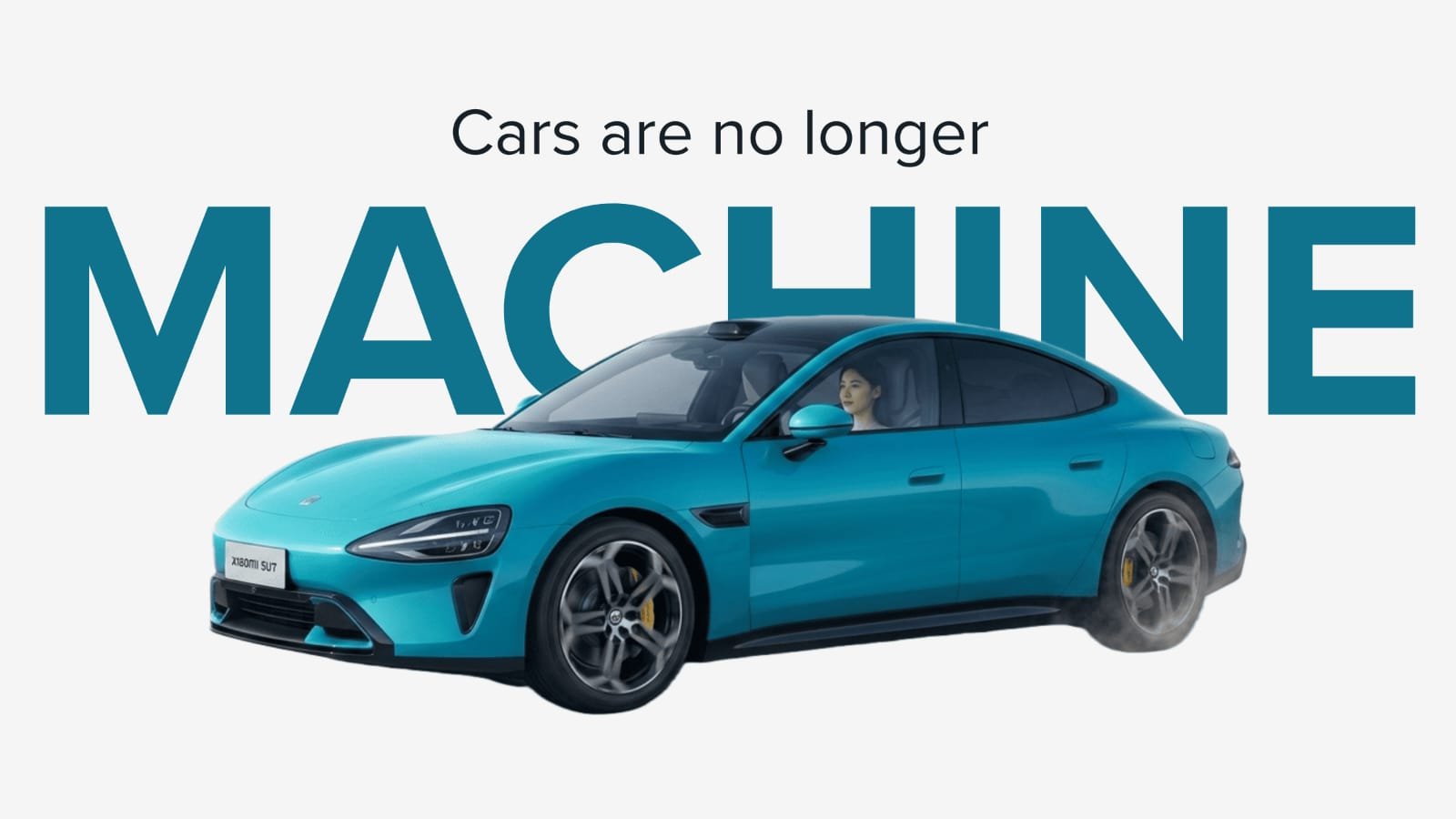
I want you to take a second and reach into your pocket. That slab of glass and metal you’re holding, your smartphone, is essentially the brain of your entire life. It’s your bank, your cinema, your camera, and your social hub. Now, imagine if you could sit inside that phone, hit a pedal, and blast from 0 to 100 km/h in seconds.
It sounds like a fever dream from a sci-fi novel, but the reality is that the “Apple vs. Samsung” war of the 2010s is currently moving from our pockets to our garages. We’re witnessing a bizarre, high-speed collision where the companies that used to worry about screen resolution and battery life are now obsessed with torque, downforce, and lap times at the Nürburgring.
If you told a car enthusiast twenty years ago that a company famous for making budget-friendly fitness trackers and air purifiers would build a car that could challenge a Porsche Taycan, they’d have laughed you out of the showroom. Yet, here we are in 2026, and Xiaomi, Huawei, and Sony aren’t just “trying” to make cars; they are building some of the most advanced electric supercars on the planet.
The question everyone asks is: Why? Why would a phone company want to deal with the massive headaches of car manufacturing, safety regulations, supply chains, and crash tests?
The answer is actually simpler than you think.
It’s because the car has fundamentally changed. A century ago, a car was a feat of mechanical engineering; it was about pistons, valves, and gear ratios. But an Electric Vehicle (EV) is different. An EV is essentially a “rolling computer.” Once you remove the vibrating, exploding mess of an internal combustion engine, what you’re left with is a giant battery, some electric motors, and a massive amount of software to keep it all running.
This plays right into the hands of tech giants. They are already experts at managing heat in tight spaces, optimizing battery life, and designing chips that can process millions of data points per second. To Xiaomi or Huawei, a car is just a very large, very fast smartphone with four wheels and a windshield.
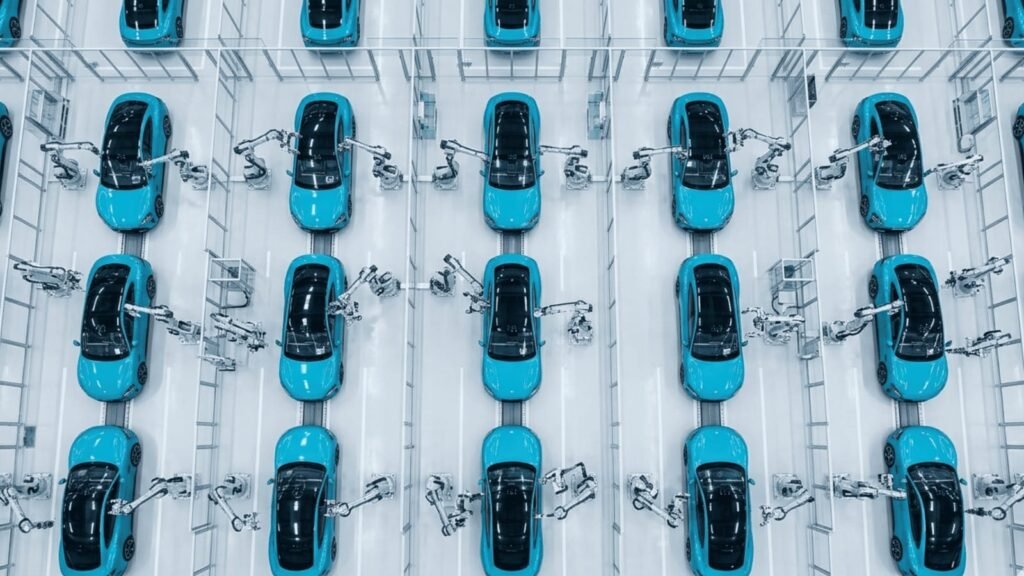
Let’s talk about Xiaomi. Most of us know them for phones that offer great value, but in 2024, they dropped the SU7. It didn’t look like a “budget” car; it looked like a sleek, aerodynamic predator. Then they went a step further with the SU7 Ultra, a triple-motor beast that literally set the record for the fastest four-door car at the Nürburgring.
In the past, if you wanted more power, you needed a larger engine. Today, you just need a better algorithm. This is where Huawei is quietly dominating. Unlike Xiaomi, which decided to build its own factory, Huawei is playing the “Intel Inside” game. They partner with traditional automakers like JAC and SAIC to provide the “brain” of the car.
Huawei’s HarmonyOS and its autonomous driving tech are becoming the gold standard for smart EVs in China. They realized that while traditional car companies are great at making doors that shut with a satisfying “thud” and suspensions that glide over bumps, those same companies are often terrible at making software. If you’ve ever used a clunky, lagging infotainment system in a traditional car, you know exactly what I mean.
Phone companies are bringing “Software Stability” to the road. They are making dashboards that feel like iPads, fluid, intuitive, and constantly updated over-the-air. Your car doesn’t just stay the same; it gets smarter while you sleep.
There’s a deeper strategy here, and it’s a bit brilliant (and maybe a little scary). Xiaomi calls it the “Human x Car x Home” ecosystem.
Think about it: you’re at work, and you use your Xiaomi laptop. You check your Xiaomi phone. You get home, and your Xiaomi vacuum cleaner is cleaning the floor while your Xiaomi TV suggests a movie. Now, the car is the final piece of that puzzle.
When you get into your car, it already knows your seat preference, your favorite playlist, and your destination because it’s all synced to one account. As you drive home, you can tell your car’s voice assistant to turn on the AC in your living room and start the rice cooker. The car isn’t just a way to get from A to B anymore; it’s a mobile room in your smart home. Once you are that deep into an ecosystem, the “switching cost” becomes huge. Why would you ever buy a different brand of phone if it means your car won’t “talk” to it anymore?
And then we have Sony. They’ve teamed up with Honda to create Afeela. Sony’s angle is different, they don’t care as much about being the fastest; they want to be the most entertaining.
Sony sees the future of autonomous driving as a massive opportunity for “content consumption.” If the car is driving itself, what are the passengers doing? They’re watching movies, playing games, and listening to 360-degree spatial audio. Sony is turning the car into a mobile PlayStation lounge. It’s a shift in focus from the “driver” to the “user.”
I’ve spent a lot of time praising these tech giants, but let’s be real for a second. Making a phone is hard, but making a car is a different beast entirely.
Traditional carmakers like Mercedes, BMW, and Toyota have spent a century learning about safety, durability, and “ride quality.” A phone that glitches is an annoyance; a car that glitches at 100 km/h is a disaster. There is a “longevity” factor that tech companies haven’t proven yet. Will a Xiaomi car still feel tight and rattle-free after ten years of salt-covered winter roads and scorching summer sun? We don’t know yet.
There’s also the “boring” stuff like service networks. If your phone breaks, you go to the mall. If your supercar’s suspension fails, you need a specialized garage. Building a global network of mechanics and spare parts is a trillion-dollar challenge that even Tesla struggled with for years.
We are currently in the most exciting era of transportation since the invention of the assembly line. The boundaries are dissolving. We are seeing a “combinatorial creativity” where the sleek aesthetics of smartphone design meet the raw power of electric motors.
Whether you’re a “petrolhead” who misses the sound of a V8 engine or a tech enthusiast who can’t wait for a car that drives itself, one thing is certain: the car is no longer just a machine. It’s a platform. It’s a gadget. It’s a statement.
So, next time you see a supercar fly past you with a logo you usually see on a power bank or a pair of headphones, don’t be surprised. The tech giants aren’t just joining the race; they are trying to rewrite the rules of the road.
The real question is: are you ready to trust your life to a company that occasionally asks you to “restart your device to apply updates”? Personally, I’m fascinated and still in doubt by the adrenaline of it all, and how they will manage the real-life challenges of the road that will bring them unexpected twists. Think about it, Tesla has kind of achieved this status; others are still in the race, but will that be worth it if you consider these in the long run?