I want you to imagine a world where you never have to look down again. You’re walking through a park, and instead of fumbling with a slab of glass in your pocket, the name of the person walking toward you just… appears. A little digital whisper floating in the air. You look at a restaurant, and its rating pops up next to the door like a floating neon sign. It sounds like the peak of human convenience, right? It feels like we’ve finally stepped into the future we were promised in every 90s sci-fi movie.
But there’s a reason why, for the last decade, every time a tech giant tries to put a camera on our faces, the world flinches just a little bit.
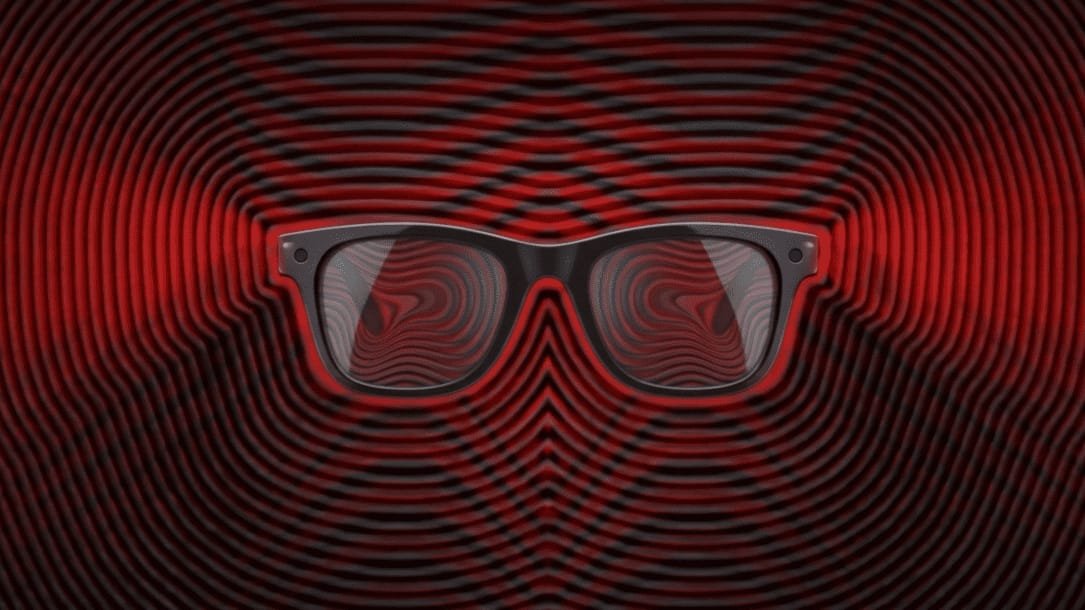
We are currently living through the second coming of smart glasses. From the sleek Ray-Ban Metas to the high-tech rumors surrounding every major fruit-themed tech company, these devices are being sold to us as the ultimate way to “stay present” while staying connected. But if we peel back the shiny marketing and the “cool” factor, we find ourselves standing on the edge of a very dark, very quiet cliff.
How did we get here? How did we go from bulky headsets to glasses that look so normal you wouldn’t even know they were “smart”? It’s a story of small, quiet decisions that have slowly eroded the one thing we used to take for granted: our privacy in public.
To understand this, we have to go back to 2013. This was the era of Google Glass. If you remember those, they were… well, they were awkward. They looked like a piece of lab equipment accidentally got stuck to a pair of spectacles. They had a tiny little prism over one eye, and they made everyone around you feel incredibly uncomfortable
Back then, the world wasn’t ready. We called the people wearing them “Glassholes.” We banned them from bars, movie theaters, and casinos. Why? Because for the first time in history, the “camera” was no longer a device you had to hold up. It was a part of your face. The social contract, the unspoken agreement that we aren’t being recorded unless someone is visibly holding a phone, was shattered.
But tech companies are nothing if not persistent. They realized the problem wasn’t the camera; it was the look. They understood that to get us to accept a surveillance device on our faces, they had to make it invisible. They had to make it fashionable.
Fast forward through years of “Snapchat Spectacles” and experimental frames, and we arrived at the current era. We decided that we wanted our tech to be “ambient.” We wanted to stop looking at screens and start living “in” the digital world. It was a pivot from a tool we use to a tool we wear. And that is exactly where the shadows began to grow.
The real dark side of smart glasses isn’t just about a hacker watching through your eyes, although that’s a nightmare in itself. It’s much more subtle than that. It’s about the death of the “private moment” in public spaces.
Think about the last time you were at a concert, or maybe just sitting on a bench in a crowded square, people-watching. In the “phone era,” if someone wanted to record you, they had to make a physical movement. They had to raise their arm, aim the lens, and look at a screen. That physical “tell” gave you a chance to react, to turn away, or to ask them to stop.
With modern smart glasses, that “tell” is gone. Yes, many of them have a tiny LED light that blinks when they’re recording, but let’s be honest, in the bright sun or a crowded room, who is actually looking for a pin-sized white light on a stranger’s sunglasses?
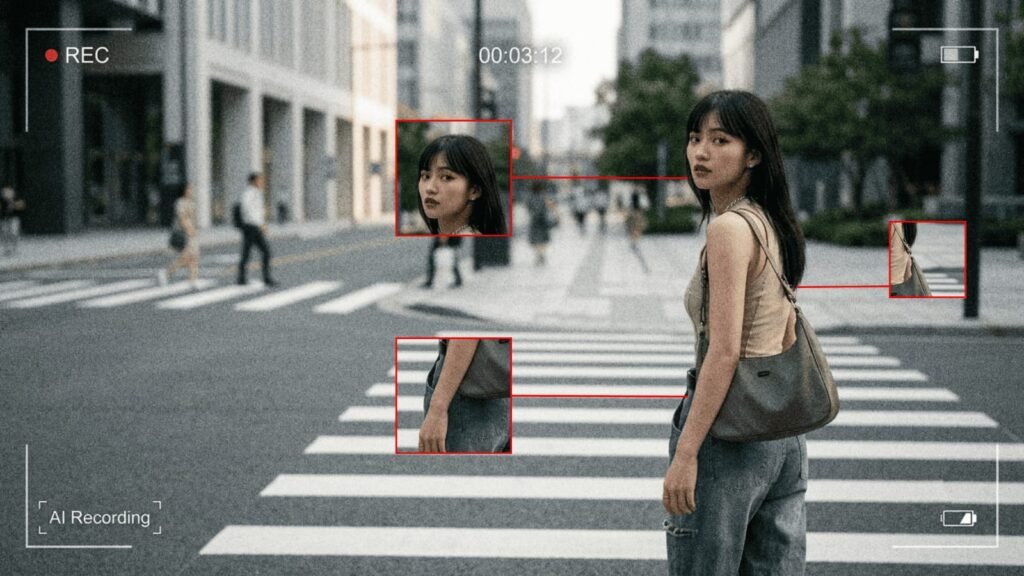
We are moving into a world where every stranger you pass is a potential livestreamer. Every conversation you have in a coffee shop could be being processed by an AI in real-time, looking for keywords to sell you a different brand of latte tomorrow morning. We’ve turned the entire world into a movie set where nobody knows they’re being filmed, and there is no “cut.”
The reason we “needed” this, at least according to the companies building them, was to solve the “distraction” problem. We were told that phones were pulling us away from our families and our friends. By putting the info in our line of sight, we could stay “in the moment.”
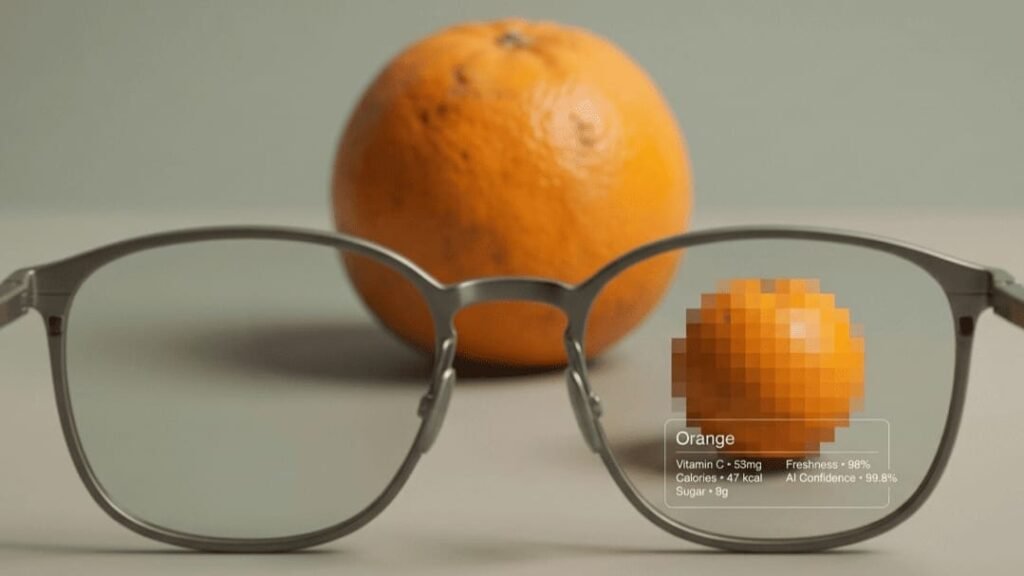
But there’s a trade-off. To make these glasses truly useful, they need to “understand” what you’re looking at. That means the camera isn’t just a camera anymore, it’s an eye for an AI.
When you look at a landmark, and the glasses tell you its history, that’s cool. But for the glasses to do that, they have to constantly stream data to a cloud server. They are seeing your home, your children’s faces, the private documents on your desk, and the PIN you’re typing into the ATM.
We are effectively paying these companies to let them see through our eyes. We are giving them a front-row seat to our most intimate, uncurated moments. Your phone only sees what you point it at; your glasses see everything you live.
There is also a psychological dark side that we don’t talk about enough. Have you ever talked to someone wearing smart glasses? Even if you know they aren’t recording, there is a tiny, nagging part of your brain that wonders: Are they looking at me, or are they reading a text? Are they listening to me, or are they watching a YouTube short in the corner of their eye?
It creates a new kind of “presence anxiety.” It’s hard to build a deep, human connection when you feel like you’re competing with a digital overlay for someone’s attention. It turns every face-to-face interaction into a “maybe-virtual” one. We are losing the ability to be fully, 100% “there” with another person, and we’re doing it for the convenience of checking our notifications 0.5 seconds faster.
So, how did we end up here? We ended up here because we value “smoothness” over everything else. We wanted our tech to be frictionless. We didn’t want to wait, we didn’t want to reach, and we didn’t want to look down.
But friction is often what keeps us safe. The friction of having to pull out a phone is what reminds us that we are entering a “digital mode.” When the digital and physical worlds blend perfectly, we lose the ability to tell them apart.
We are currently in the “honeymoon phase” of this tech. It’s the time when we’re fascinated by the “wow” factor. We’re recording POV videos of us cooking or skating, driving, and it feels liberating. But the time capsule is closing, and when we look back at this moment in ten years, we might realize that this was the year we accidentally deleted the concept of a “private walk.”
The dark side of smart glasses isn’t a glitch; it’s a feature. To have the “magic,” you have to give up the “invisible.” We are trading our anonymity for a heads-up display, and the price might be higher than we ever anticipated.
As we move forward, we have to ask ourselves: just because we can see everything, does it mean we should? Or was there something beautiful about the world before it was covered in a layer of digital noise and constant observation?
Maybe the most “advanced” thing we can do in 2026 is to take the glasses off, look someone in the eye, and know, with absolute certainty, that the moment belongs to just the two of us. Until then, keep your eyes open, because you never know who else is looking through them. This is just to make you more cautious, not in a creepy, could be if you think, but BEWARE!