Early this year, while researching for the women’s ICC World Cup 2025, I stumbled upon a part of YouTube that women seldom care to know and men always seem to prowl. The keyword that led me there was ‘women’s sports’, and the results were nothing as you’d expect. In an instant, I was greeted with half-nude imagery, women athletes shown in compromising positions, their skin-tight shorts barely hiding their buttocks; thumbnails circling or pointing to their pelvic area, or worse, showing a wardrobe malfunction as part of a ‘funny video compilation’.
Ironically, these videos racked up millions of views, with some of them boasting 10x the views of any videos about the women’s ICC World Cup victory. And so, I was forced to ask the question: “Do we live in a world where women in sports are measured for their beauty rather than their talent?”
And the answer revealed itself in the comment section. Almost 90% of them were filled with ‘men of culture’ congratulating the cameraman on a job well done. The remaining 10% only talked about how gorgeous they looked, as if they were models, not athletes. None of them talked about how talented they were or what achievements they had bagged.
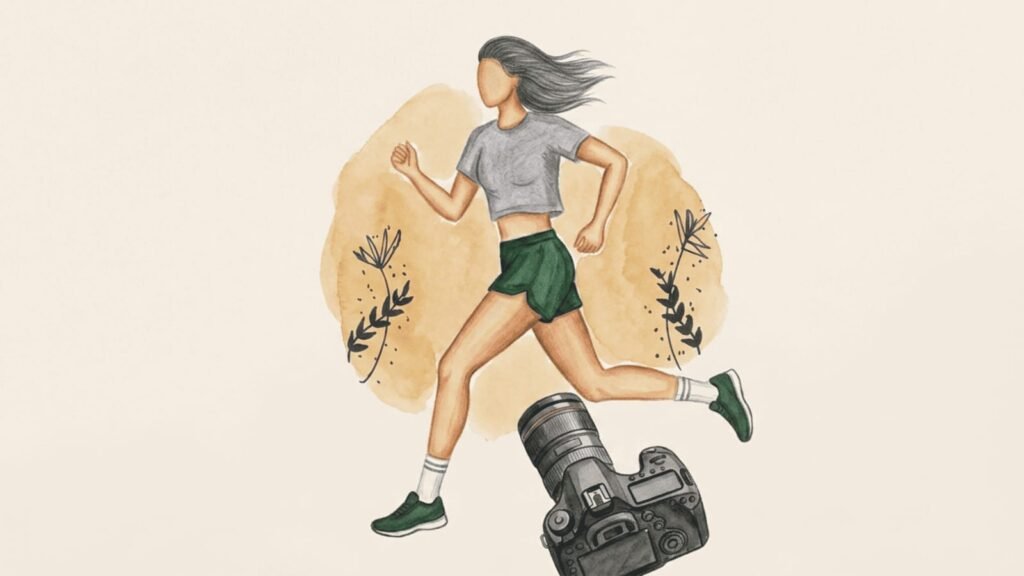
Needless to say, women’s bodies in almost every sport across the world are treated as an eye-candy, mainly packaged and served for male consumption.
And that’s just not me speaking; athletes have voiced their concerns time and again.
“Think of it this way: when cameras are trained on you, and you’re dressed in a short skirt, part of your attention inevitably shifts from performance to self-consciousness, wondering how much skin is showing, how you appear, how you’re being perceived.“
“You put the top on, and your life is sucked out of you”, spoke the Olympian Tess Howard to CNN news, talking about the uniform for Great Britain’s women’s field hockey team. The uniform here was a tank top with shorts or a skort that worked in favor of them looking prettier than how well they can perform wearing it. “I was playing for my country – I shouldn’t be this uncomfortable.” This statement becomes anything but an exaggeration when we look at the number of young girls leaving sports in the UK. A report suggested that about 70% of the reasons girls were dropping out of sports at school were mainly due to clothing and related body image concerns.
But it’s not just the UK; athletes from other countries have also challenged the dressing norms. Erin Philips, the Australian basketball guard who received the honor of AFL Women’s best and fairest twice in her career, also displayed concerns about her team’s “skin-tight, leave-nothing-to-the-imagination Opals bodysuit uniform”, which sexualized them as well as pressurized them to look a certain way.
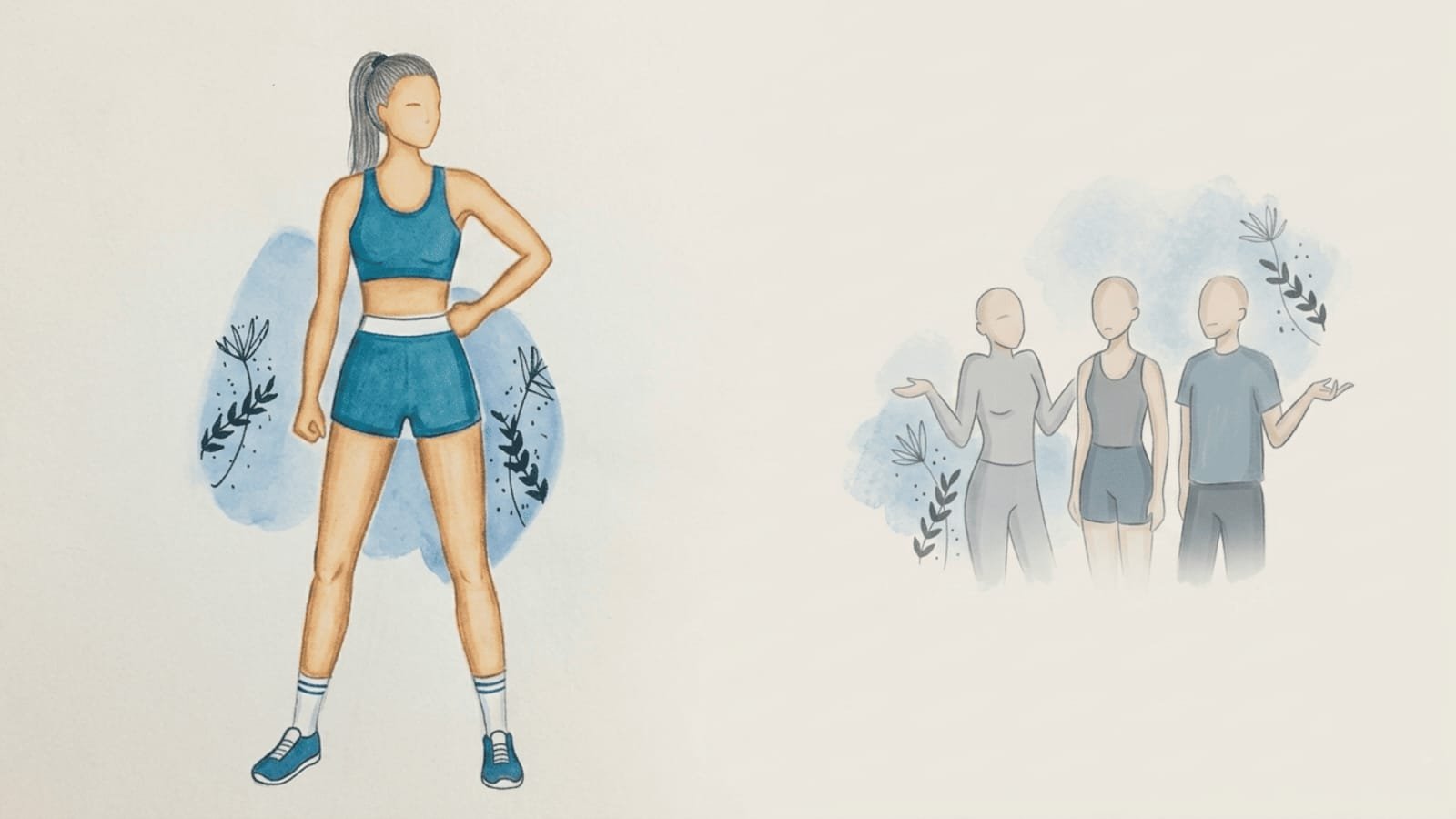
Yes, women athletes are constantly expected to maintain the way they look. Think of it this way: when cameras are trained on you, and you’re dressed in a short skirt, part of your attention inevitably shifts from performance to self-consciousness, wondering how much skin is showing, how you appear, how you’re being perceived. And that pressure is always on.
It is just how the sports councils and federations treat women in sports. They only know that their sexuality is more marketable than their talent. That is why, in 2011, the Badminton World Federation forced female athletes to wear skirts or dresses to “market themselves” better and save the TV ratings from going low. What do you expect from a council who boards only 10 women in a seat of 30? And that’s true for most of the prestigious sports organizations. FIFA has only 8 women council members in a group of 37. BCCI has only 1 out of 9. So, how can sports policies be in favor of women when the decision-making tables are still dominated by men?
Despite this, women athletes have fought back time and again, refusing to be reduced to mere decorations. In 2021, the Norwegian handball team decided to wear comfortable spandex shorts instead of the traditional bikini bottoms for the European Beach Handball Championship. But rather than being lauded for their progressive approach towards misogynistic costumes, they were fined $1,700.
Similarly, the four times olympic gold winner and the winner of the Grand Slam women’s singles, Serena Williams, appeared at the French Open 2018 in a black catsuit instead of the usual dress and skirt. This style choice was to prevent health complications like blood clots.
“I was a new mom and just trying to be me. It was a great moment.” Said Serena Williams in an interview, talking about the suit, “I didn’t know it would cause such a stir.”
Williams was banned from wearing the catsuit in the future at the Roland Garros after the French Tennis Federation president Bernard Giudicelli announced a stricter dress code for the tournament. He stated that breaking the dress code would no longer be permitted, emphasizing that players were expected to show respect for both the sport and the venue.
With an outlook like this, even from the top officials, it would be difficult to expect change anytime soon. But change is necessary, rather much needed. While the reality is that objectifying gazes may not disappear overnight, we can choose where we place our attention: on their skill, discipline, and achievements rather than on how they appear to us. Sure, sex can draw the crowd, but it is talent that will eventually make the audience stay.