
A QR code hanging with the lighter in the kirana store in a village. A college student putting prompts to its AI agent and waiting for an answer that he expects will be better explained than his 50-year-old professor. A farmer in a small village of Aurangpur in Haryana watches the latest mandi prices on YouTube before selling his crop. All of this is happening simultaneously.
India did not experience technology like this. It was very different some years ago; only the privileged ones had access to phones, smartphones, and computers. At least now the farmer may not own a laptop, but knows what it is.
India experiences it as fragments, small, everyday interactions stitched together across people, places, and needs. Which raises a bigger question we rarely stop to ask.
How is India actually changing as it moves toward being “tech-savvy? And what does that change look like once you step away from the urban jungle?
What does being “tech savvy” even mean in India?
In theory, being tech-savvy sounds impressive. It’s often associated with coding skills, startups, or building the next big app. But that definition doesn’t travel well outside a few urban pockets.
In the Indian context, tech savviness looks quieter.
It looks more like a comfort, rather than a dependence on something, rather than selling your soul to tech tools (not really, but you get the point).
It’s not about knowing how something works, but knowing how to use it well enough to get through the day, like how a homemaker uses YouTube to fix appliances.
That difference matters.
Using technology is not the same as understanding it. Adapting fast is not the same as adopting deeply. India has done the first part remarkably well. The second part is still catching up. And that gap shapes almost every tech story we see today.
A survey released by Google-Kantar in 2025 states that 60% Indians are unfamiliar with AI. This survey had 8,000 participants spanning across tier 1 & 2 cities, aged from 18 to 44. Realistically, this seems scary in an era where people are threatened and are losing jobs because of AI, and the majority of the population doesn’t even know about it.
And the entry point for being tech-educated was, for most Indians, the smartphone.
Before laptops, desktops, or broadband, the phone arrived quietly, like an uninvited guest and stayed. The first mobile call was made on July 31st, 1995, and the rest is history. Nokias and Blackberries flooded the market, and slowly phones started becoming a bank, a classroom, an office, a television, and sometimes a lifeline. Back when they were first introduced, a single call used to cost around ₹8 – ₹16 per minute, but everything changed when Mukesh Ambani’s Reliance Jio brought the “free calls and internet” culture.
Internet usage became routine, not special. Something you did without thinking about it, like switching on a light. That routine nature is what made scale possible.
This foundation layer, smartphone first, everything else later, is what separates India’s tech journey from many other countries. Finding comfort in one thing and not moving forward is a human trait, but Indians took it too far.
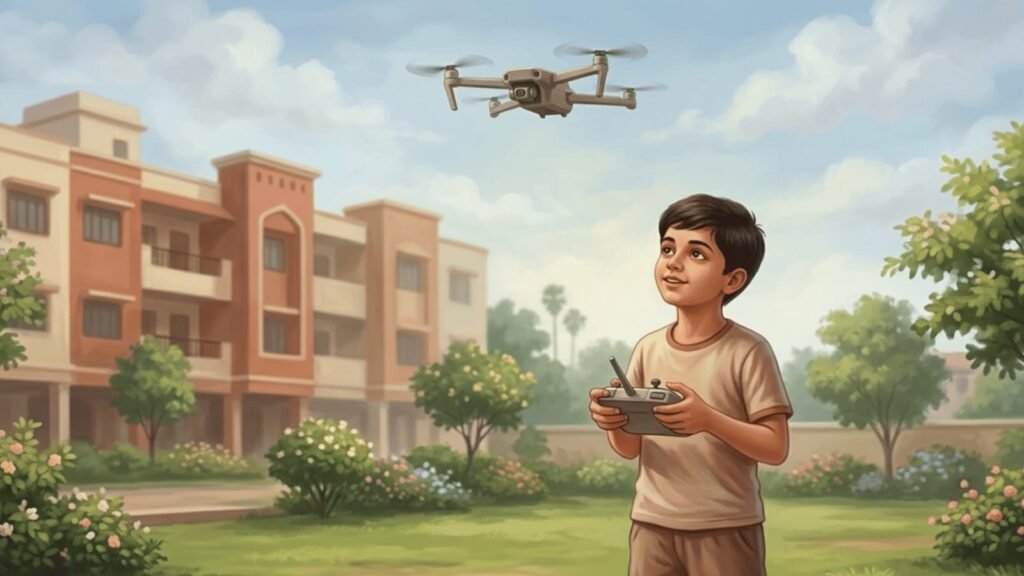
For a long time, rural India was described as “lagging.” Poor connectivity. Lower literacy. Weak infrastructure. Tech adoption was framed as something that would happen later.
That assumption didn’t age well.
Government initiatives like BharatNet and Digital India changed the baseline. Fibre reached the gram panchayats, mobile networks expanded, and affordable data filled the gaps that cables couldn’t.
The result was unexpected.
Overnight, rural internet users overtook urban users. But we saw the difference in the way they adopted it. Urban users caught onto it, driven by curiosity or fear of missing out, whereas the rural population looked upon it as a necessity.
Phones were shared. Apps were voice-led. Interfaces shifted to local languages. People learned by watching others, not by reading manuals. YouTube became a teacher. WhatsApp became a helpdesk.
This adoption triggered real economic shifts.
Farmers began using weather data, price discovery platforms, and precision farming tools to reduce uncertainty. UPI reduced cash dependence in villages that never had reliable banking access. Telemedicine brought doctors closer without physical travel. E-governance services reduced middlemen.
“The mobile phone has truly revolutionalized everything,” said Jadish Ji, a landlord in the Tikri village of Gurugram. “It brought bank, school, shops, everything to our homes.”
The takeaway is simple but important.
Rural India didn’t wait to become “tech savvy.” It became tech-capable first.
Let’s understand this with the help of an example. If one system captures India’s tech shift perfectly, it’s UPI.
Digital payments didn’t spread because people trusted banks more. They spread because the experience worked. Quickly. Repeatedly. Everywhere.
Street vendors. Auto drivers. Temples. Tea stalls. Tier-3 towns and villages. I have even seen beggars at the traffic signals carrying QRs so that you can provide them money online, if not offline, in cash.
From the time it was introduced in 2016 to the present post-corona era, UPI has become nothing short of a muscle memory.
Most users don’t think about encryption, backend rails, or settlement layers. They scan. They pay. They move on. Confidence grew faster than comprehension.
However, like all things fast, that speed too came with risks. Fraud awareness increased only after scams became common. In the years 2023-24 alone, UPI frauds surged in India, with over 13.4 lakh cases. Safety education followed adoption, not the other way around.
And then AI quietly entered the system, too. Fraud detection, transaction monitoring, risk scoring. All became invisible, but essential.
UPI shows how behavioural change at scale often precedes understanding. India didn’t wait to trust tech fully. It learned to rely on it first. The country’s digital literacy story doesn’t look like classrooms or certifications. It looks like trial and error.
And Government skilling programs helped a lot. So did public campaigns, like Pradhan Mantri Digital Saksharta Abhiyan. This flagship rural digital literacy scheme under the Ministry of Electronics and Information Technology (MeitY) was designed to make at least one person in every rural household digitally literate.
They targeted 6 crore rural households; by mid-2024, around 6.39 crore candidates had been trained and about 4.78 crore declared successfully certified, crossing the original goal. It focused on non-IT literate citizens from weaker sections, SC/ST, BPL, women, differently abled, and minorities.
Other programs like Common Service Centres (CSCs), DICSC Project, and IndiaAI Skilling Programmes also helped (and are still doing so). A key example of this is “YUVA AI for ALL”, a short, free online course that introduces basic AI concepts, uses, and ethics. These programmes focus on students, teachers, and non‑technical learners so they can confidently use AI tools and participate in the AI‑driven economy.
But the real learning happened informally – watching videos, asking neighbours, and searching on impulse. Each “ye kaise hota hai?” moment quietly built digital confidence.
Voice and video mattered more than text. Regional language interfaces mattered more than polished design. People didn’t “learn software.” They learned outcomes: How to book a ticket? How to make a payment? How to submit a form?
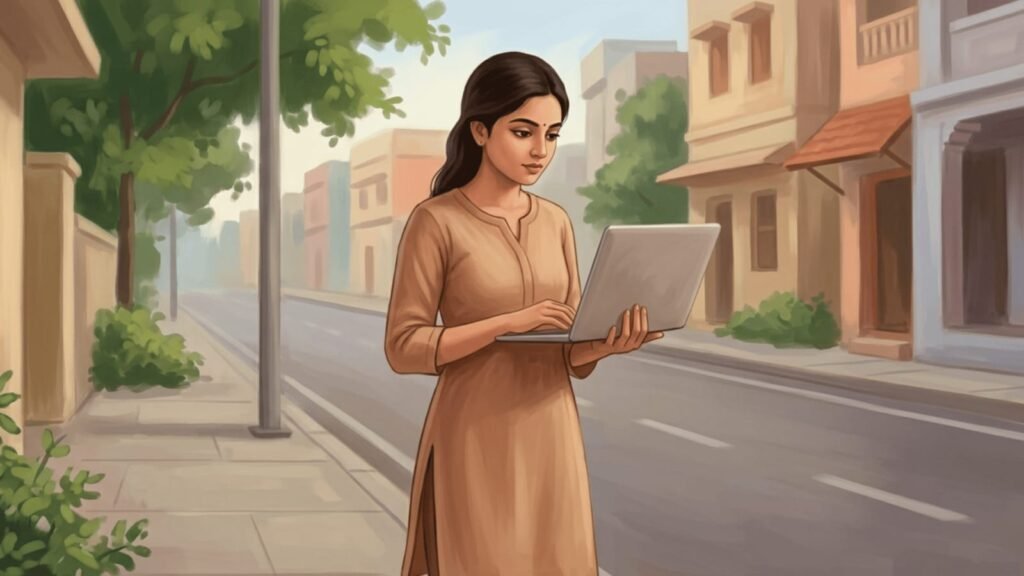
India learned tech socially and practically. Not academically. That’s why adoption spread so fast, and why understanding and access remain uneven. Today, young users switch apps, tools, and AI assistants without hesitation. They’re comfortable breaking things and fixing them. Parents and elders often aren’t. Another interesting thing to note is how women remained lagging in this tech revolution. A recent study declared that almost 51% rural women don’t own a mobile phone
Despite this, many older users started relying on help networks. Children become support desks. Relatives become translators. “Beta, ek baar dekhna” becomes routine.
Zooming out, India’s tech shift is institutional. Digital public services reduced paperwork and waiting time. Identity systems enabled scale. The payments infrastructure improved efficiency. AI entered healthcare, education, retail, and manufacturing.
For citizens, tech meant speed, accessibility, and convenience. For the state, it meant scaling a business or being progressive.
But scale brings responsibility. Systems must work reliably. Downtime affects millions. Design decisions have social consequences. When tech works, it disappears. When it fails, everything stops. Dependency isn’t bad by default. But unexamined dependency is fragile.
So to answer the question, India isn’t uniformly tech-literate. But it is deeply tech adaptive. India is curious to find out about everything new that comes with it. Behaviour is evolving faster than understanding. Momentum is real, but uneven.
Today, however, the main question that looms in the distance now is not “whether the Real India is Tech Savvy or not?”, but it is “Are we AI-ready?”
The screens are everywhere now. The question is what we choose to build around them. And whether we learn fast enough to keep up with what we’ve already adopted.