
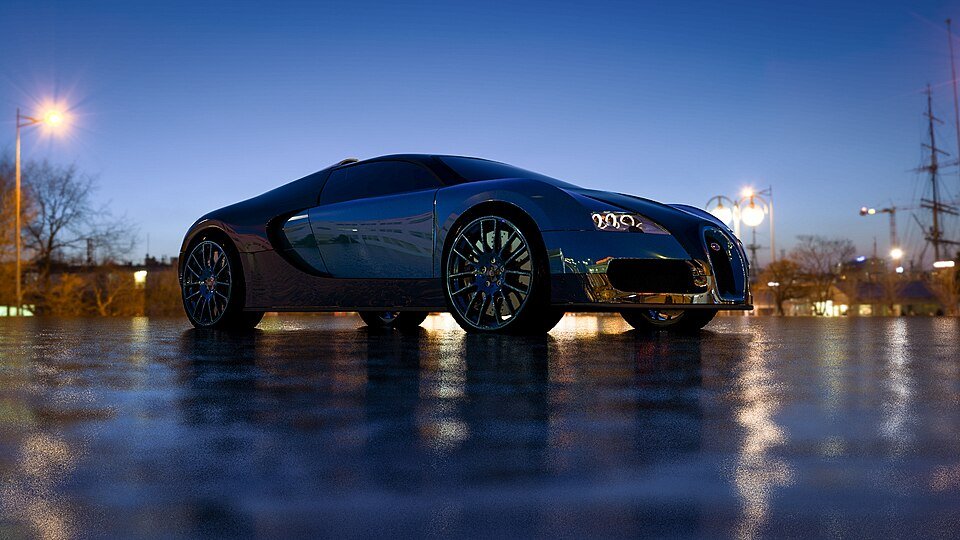
The year is 2005.
‘Bugatti’ was not a household name. The last time it made any headlines was with the EB110, that too during the economic recession of the early 90s, tanking its sales.
Young boys still used posters of Porsche, Lamborghini & Ferrari to decorate their bedrooms. Bugatti was not where it should be, such was the opinion of one man. This ‘one man’ had a vision like no other. He was Ferdinand Piëch. And he was determined to place Bugatti on the new map that was shaping itself up at the dawn of the 21st century.
VW was no stranger to acquiring car brands. Audi, SEAT, Skoda, Porsche, you name it. In 1998, under the leadership of Piëch, they added Bugatti to this list and formed ‘Bugatti Automobiles’. Observing the poor sales of the EB110, he wanted something new but also something radical. Something that could capture not just the attention, but also the hearts of petrolheads around the world.
Following the tradition of ‘efficiently German’ behavior, the team at VW unveiled the EB118: a 2-door luxury coupé at the Paris Motor Show in the same year. Designed by Giugiaro (Italdesign), it bore the existing VW-developed W18 Engine.
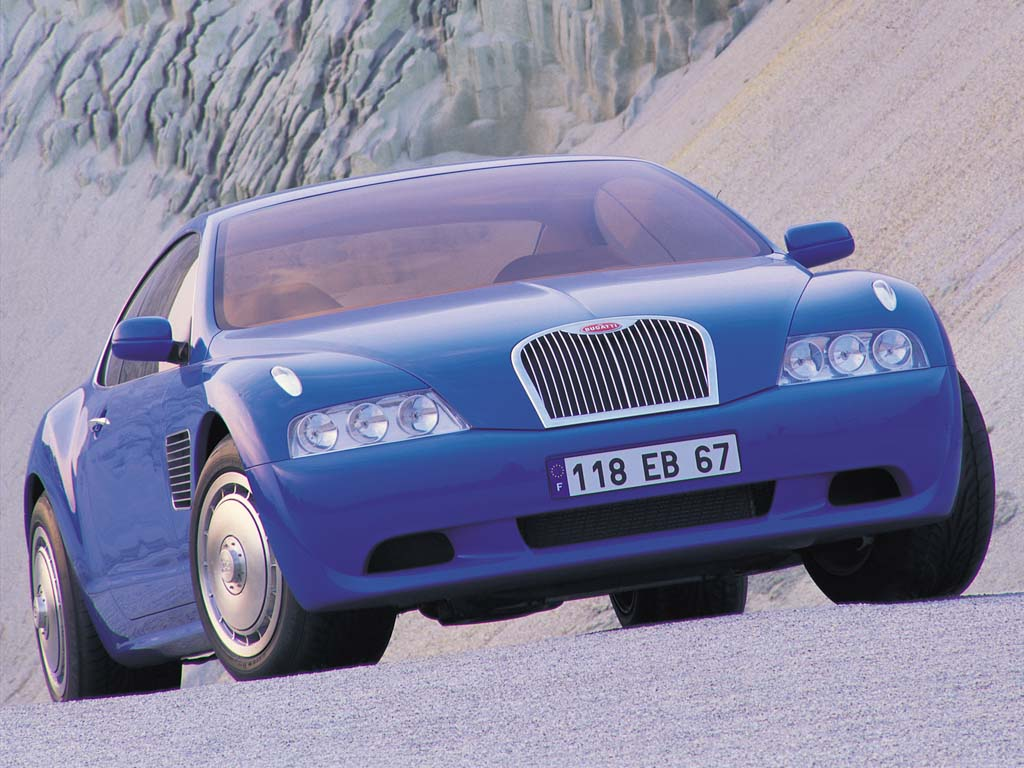
Unsatisfied (obviously, look at how hideous it looks), they went back to the drawing board and, next year, at the 1999 Geneva Motor Show, presented the EB218: a 4-door luxury saloon with the same W-18 engine.
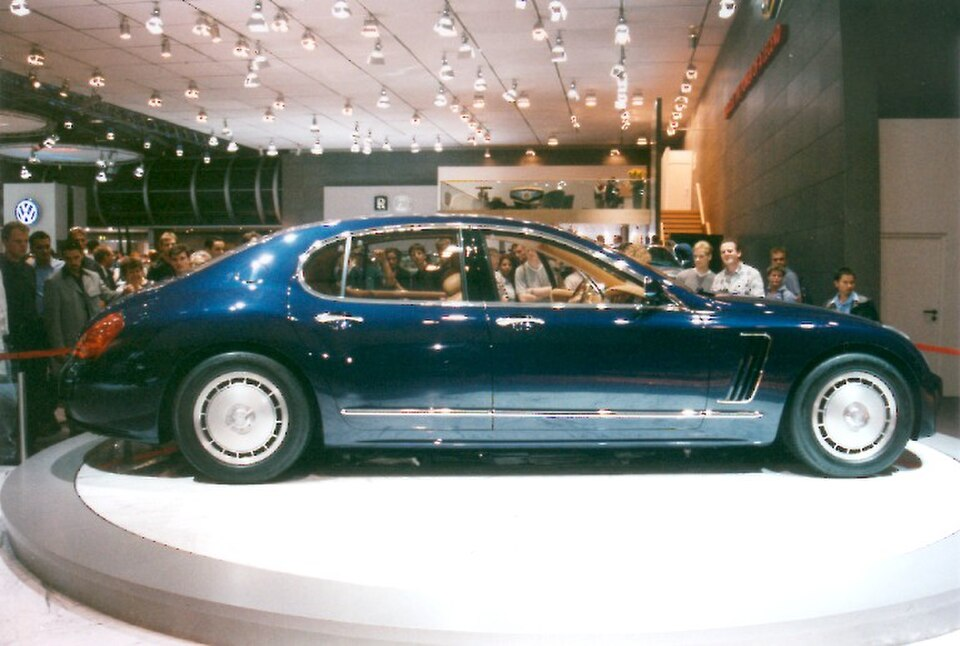
Realizing that VW still hadn’t captured the essence and that they were seemingly confused in making this ‘successor’ either a 2-door coupé or a 4-door saloon or something entirely different, they decided to try once more.
Luckily, they were getting close. In the same year, in September, they unveiled the 18/3 Chiron at the International Motor Show in Frankfurt – which might look close to the final Veyron – as it was a 2-seater mid-engined coupé. Although it was taking the correct engine layout, styling was not where it should have been. So far, the performance claims were not out there for the media.
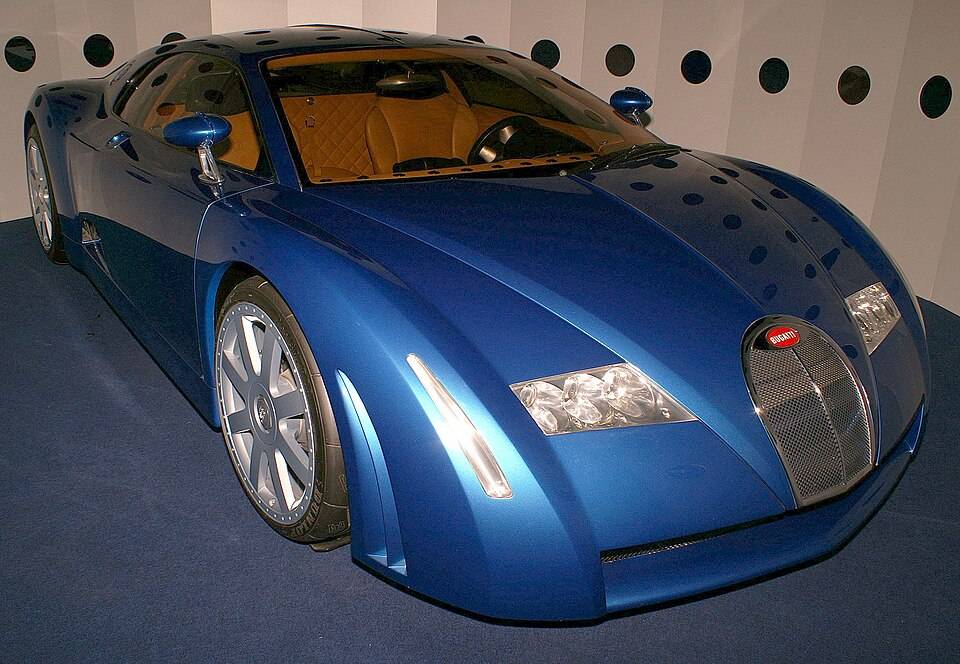
Looking at this image, you’d think ‘hmmm this is familiar’. That’s because it is. But then a month later they revealed the EB 18/4 Veyron, which was then followed by the EB 16/4 Veyron, revealed in the year 2000. The only difference between these 2 was the engine. For the latter, VW decided to try something new. So the W16 engine was developed in favor of the old W18. As fate would have it, this engine was going to write its name in the history book for the next 24 years. These 2 final concepts, more specifically the 16/4 Veyron, were the turning point. Bugatti (and by extension VW) now had the mold they wanted to fit this ‘beast’ into.
So, the 16/4 was finalized as the model for production and by 2001, production was started. But soon after, like every other auto-manufacturer who sets out to chase the sun, VW realized the problem.
Their claims that they were spreading throughout the year 2000 and most of 2001 started to show their weaknesses.
A car that could blow past 400 Km/hr? And having 1001 PS? (~988 HP). Many Automobile Journalists/Magazines were calling it a bluff. But this was a vision. A vision of the man they all were underestimating. Piëch was relentless. Having acquired so many accolades under his belt, ranging from Audi Quattro to the Porsche 917. He knew it was not impossible. Difficult, yes, but not impossible.
For VW, fulfilling these claims was not going to be easy. The first problem was Heat/Cooling. The engine would burn so much fuel at those speeds, hence the heat – the gearbox had to last and not to mention the turbochargers getting red-hot.
Solution? A staggering total of 10 radiators with complex airflow channeling and active aero.
What about the tires? Sustaining that much speed while carrying 1.9 tons was no easy task – the answer was custom-built Michelin PAX Run flat tires that cost $25,000 per set.
The Gearbox? A specially designed 7-speed Auto-DCT, coupled with Magnesium paddles to have a shift time that’s less than 150ms – less time than what your eye takes to blink!
Suffice it to say that all these solutions failed so many times – much more than what VW anticipated.
This car felt like a pipe dream. Even Top Gear’s Jeremy Clarkson said that this was ‘.. a German engineering ego-trip’ and it was ‘..impossible’.
But VW knew what they were doing.
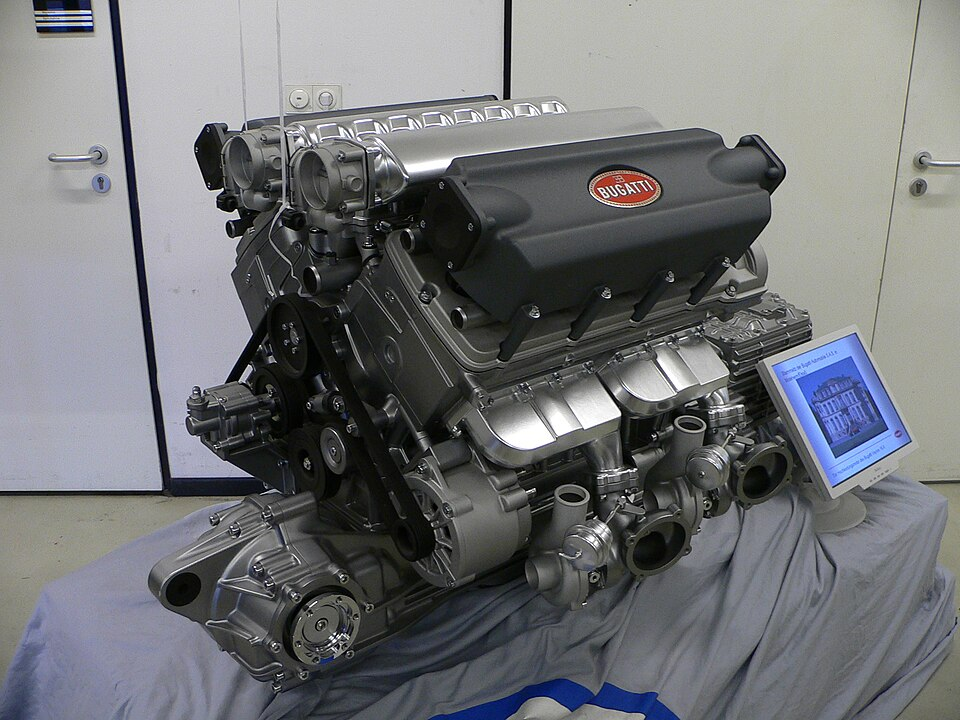
It took them almost 4 years to get to the production unit, which was stable enough to be finally revealed in 2005. That’s when they proved themselves. Bugatti, and by extension, VW, showed what was possible in the realm of automotive sciences.
Finally, in September of 2005, the world saw the brilliance.
The ‘Bugatti Veyron’, priced at €1 million, was launched.
8.0 liters of quad-turbocharged brilliance, arranged in the ‘W’ orientation. 64 valves channeling fuel and air back and forth. This beating heart produces just over 1000PS (987 HP), pushing through with a peak torque of 1250 N-m. Cross-drilled, radially vented carbon fiber reinforced silicon carbide (C/SiC) composite disc brakes capable of a deceleration of 1.3 g on road tires. 0 to 100 Km/h in 2.5 seconds. A power-to-weight ratio of 523 HP per tonne. 4.9” of ground clearance, which can be further dropped to just 2.6” in the ‘Top Speed Mode’, which was the catalyst in reaching 407 Km/h (253 Mph). An active rear wing, which can retract if you want a low-drag, high-downforce setup for maximum speed OR extrude if you wanna brake immediately and deploy it as an air brake.
It was simply phenomenal.
Correctly dubbed the ‘Concorde moment’ of the automobile industry.
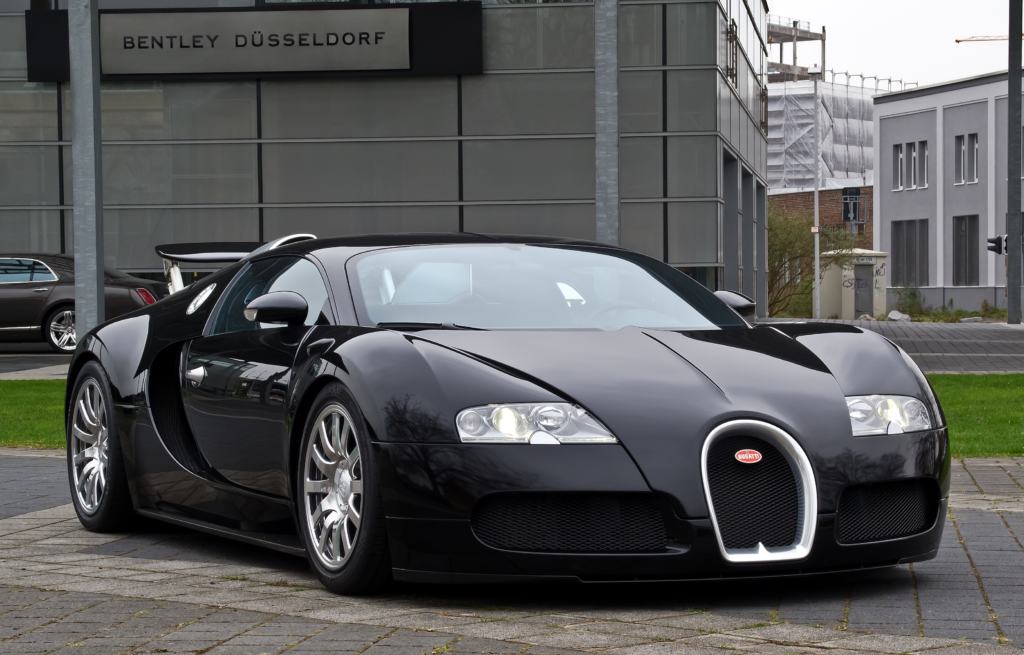
This car right here beat the McLaren F1 and left everyone in shock. It broke all records for production cars. It was a miracle that it existed.
They did what was impossible. What was once thought of as a pipe dream.
A car that shouldn’t have existed, but it did. A car that, when flat out (max speed), can empty its tank in roughly 12 minutes. A car that won’t wobble at those high speeds. A car that can consume 45,000 liters of air at its top speed.
A car that seems no less than an act of God, sitting here, on a throne of its own, shaped by humans.
Not to stop here, Bugatti did follow up with various models of Veyron. The ‘Grand Sport’, the ‘Super Sport’ and the ‘Grand Sport Vitesse’ – all record holders in some capacity or the other. In November of 2010, James May of Top Gear reached a blistering 407.5 Km/h (253 Mph) on a VW-owned test track, albeit with the ‘Super Sport’ model. That was proof enough that VW had succeeded.
This car sits as a testament to the limits a human mind can break. When you let engineers go crazy with the spec, when you let designers draw with a real free hand, when you support your team in creating something that was deemed ‘impossible’.
In today’s age, when everyone thinks EV’s are the future, I’d like to look back and admire the titans that once roamed the streets. The absolute monstrosity that this car was. Not only what it set out to achieve, but also became a source of inspiration for so many other manufacturers. The car that literally created the ‘Hypercar’ category – because ‘Supercar’ won’t do it justice. Not just the car, but the beauty of the W16 that gave way to so many Hypercars under the Bugatti moniker.
Suffice it to say, the impact was far and wide, but the beginnings were humble. They only sold 5 in their first year in 2005. But Veyron was not just there for the numbers. It was a strategic halo car – that showed what was not impossible.
As a little treat, here’s a clip from a video game capturing the essence of that engine on a slow drive across the UK.