There’s a good chance you had sugar today. In your chai, maybe. A spoonful stirred into something without thinking. You probably didn’t pause to wonder where that sweetness came from and I don’t mean the factory or the field… I mean the woman.
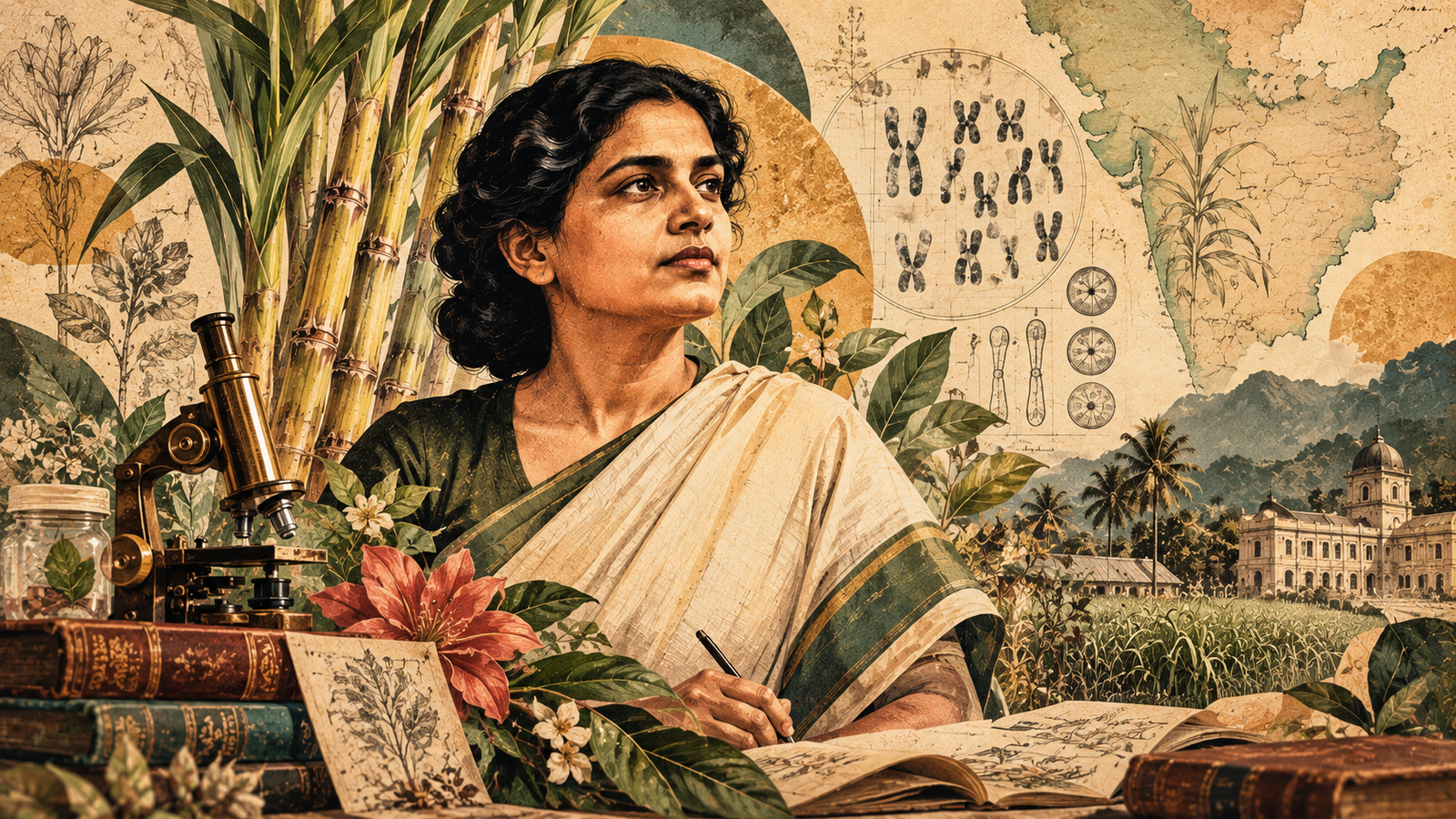
Her name was Janaki Ammal, and the odds were stacked against her before she could even spell them.
Born into a marginalised caste in the Madras Presidency, Janaki grew up in a world that had already decided what she was allowed to become, which wasn’t much. Marriage was the obvious path… the expected one. The only one, actually, for a woman of her background. Yet she chose to refuse it. She simply chose something else. She chose science.
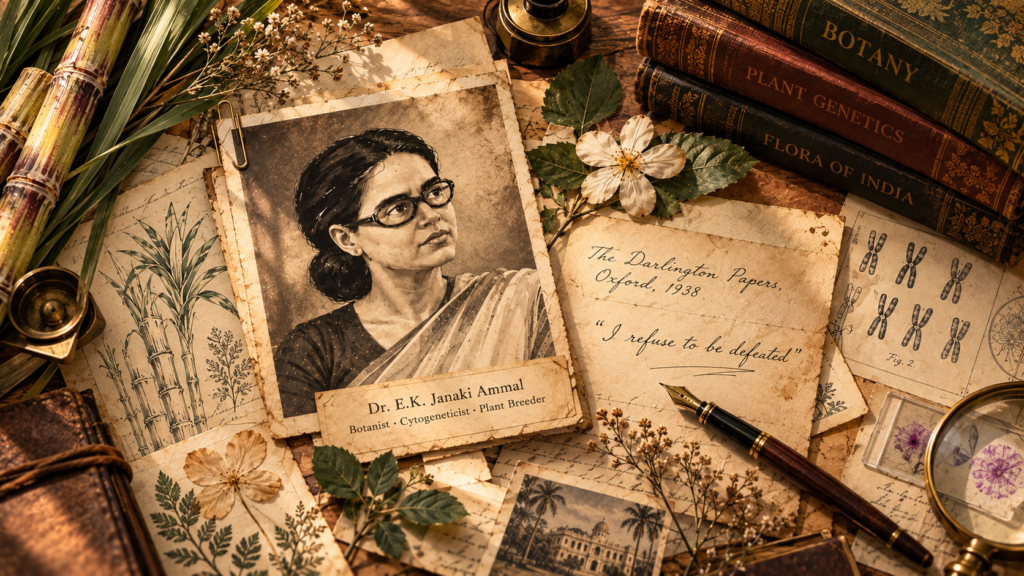
That silent defiance carried her all the way to the United States, where in 1931, she became the first Indian woman to earn a PhD in botany. Let’s think about that year for a moment. India was still under colonial rule. Women in most parts of the world couldn’t open a bank account. And here she was, crossing oceans and breaking ground in a field dominated by men who probably didn’t look up from their microscopes when she walked in. When the odds are stacked against you this much, the rate of success gradually comes to zero.
And she did succeed, but she also transformed an entire industry in the process. When she returned and joined the Sugarcane Breeding Institute in Coimbatore, Indian sugarcane had a problem. It wasn’t sweet enough. The country depended heavily on imported varieties from Southeast Asia, and nobody had cracked the code on breeding a homegrown alternative that could compete. That’s what Janaki Ammal did.
Through years of meticulous cross-breeding, she developed sweeter, hardier varieties of Indian sugarcane. Every time you reach for that sugar bowl, some of that sweetness traces back to her work.
But her research took longer to be published than it should have. Not because the science was slow but because the world around her was. Patriarchy and caste discrimination don’t care how brilliant you are. They just make you wait. They make you prove yourself twice, three times, and then once more for good measure.
She didn’t break. In 1938, she wrote a line in a letter, now preserved in the Darlington Papers at Oxford, that says everything you need to know about who she was: “I refuse to be defeated.”
By 1940, she had joined the John Innes Horticultural Institute in London, diving into cytology, the study of cells and chromosomes. The work she produced there would eventually become the Chromosome Atlas of Cultivated Plants, a foundational text in the field. But the backdrop to that achievement was anything but academic. This was wartime London. Bombs fell at night. She later told friends how the scientists would hide under their beds during air raids, then crawl out the next morning, sweep up the broken glass from their windows, and get back to work.
After Independence, Prime Minister Nehru, recognising what the country had overlooked for too long, invited her back. She returned in 1950 and became the first director of the Central Botanical Laboratory in Lucknow. From there, she threw herself into identifying and conserving India’s floral biodiversity, a contribution whose full value we’re probably still catching up to.
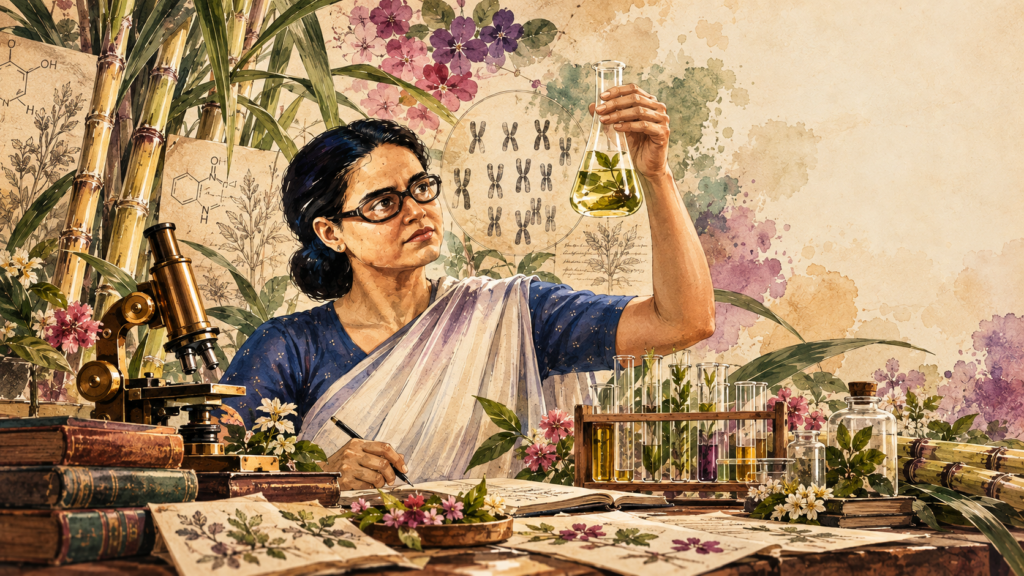
The honours came, eventually. An honorary doctorate from the University of Michigan. The Padma Shri in 1977. But honours have a strange way of arriving after the hardest part is already over.
What lingers, though, are more than just the awards… it is her legacy. The sugarcane varieties that she helped develop are still grown across India. And somewhere in Mongolia, a flower with bright white petals that blooms every year bearing her name, Magnolia kobus “Janaki Ammal.”
There’s something almost poetic about that. A woman who was told she didn’t belong, whose work was delayed and diminished, now blooms reliably, year after year, in a place she never even visited.
She was right. It’s the work that makes you eternal. All you need to do is “refuse to be defeated.”