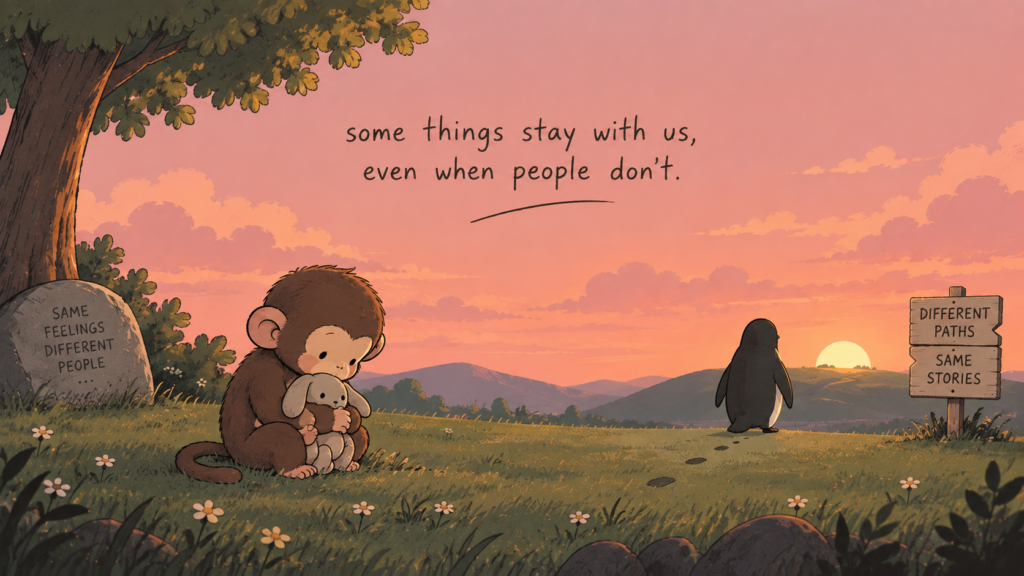
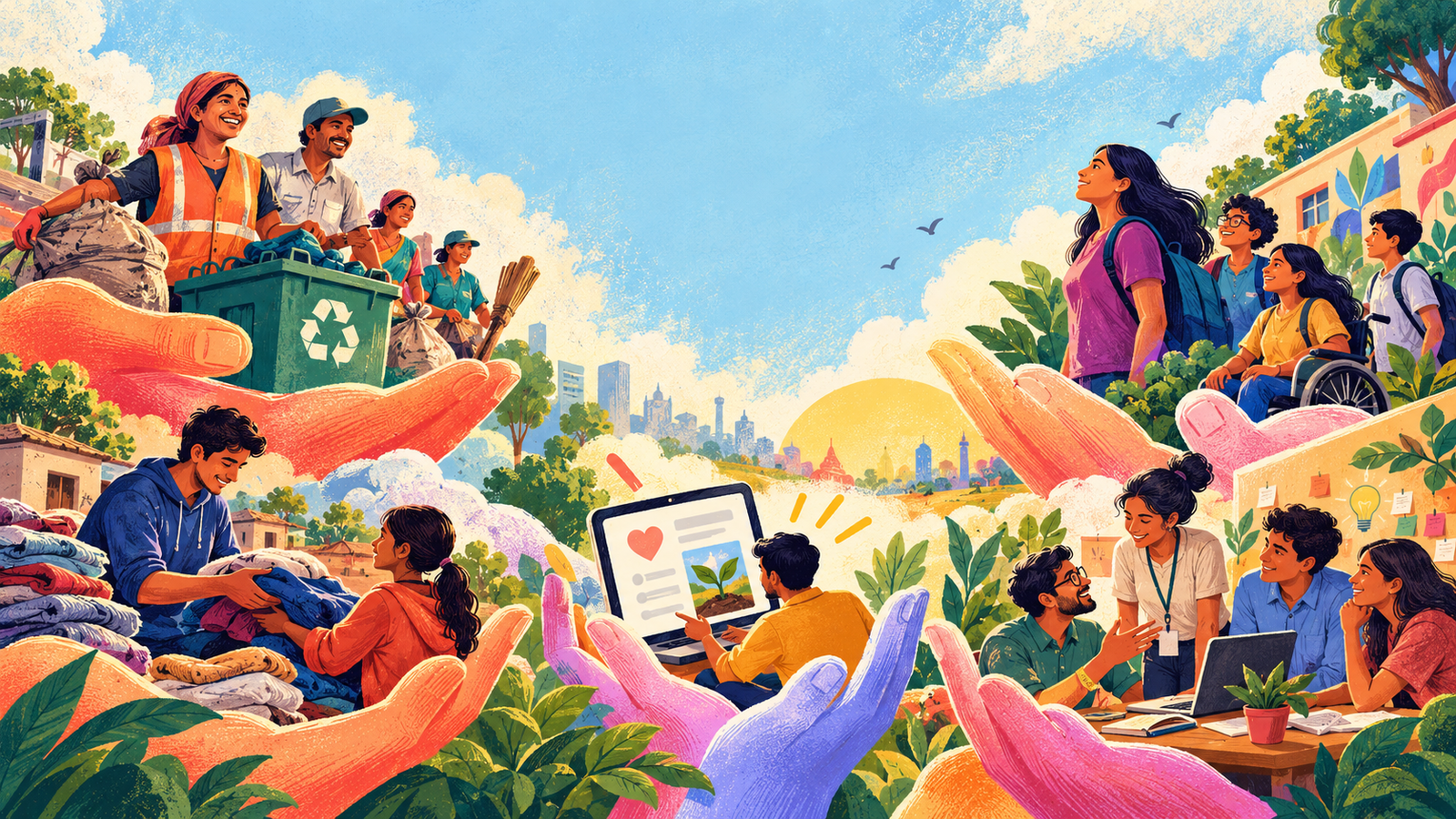
Across India, some organizations have solved problems that governments, charities, and markets have often failed to address properly.
These organizations are not treating social impact as a side activity. They are building it into the way they work. Their models support workers, rural communities, young people, social entrepreneurs, and donors who want to see where their help is going.
They show that profit and purpose can work together.
Nidan
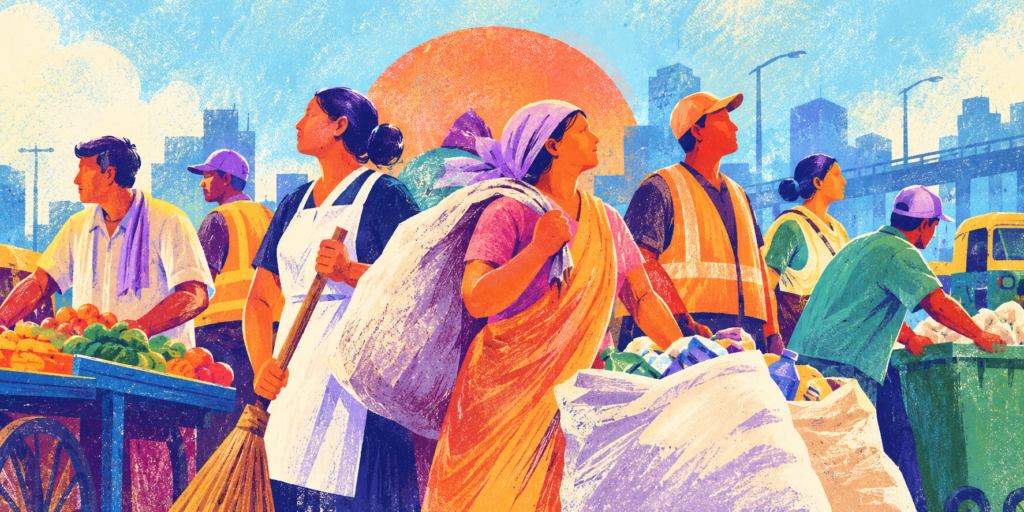
In the mid-1990s, if you walked through the streets of Patna or parts of Delhi, you would see thousands of people keeping the city alive. Street vendors were selling food and goods. Rag-pickers were collecting waste. Domestic workers were moving from one home to another. They were part of the city’s everyday economy, but they were rarely treated like real economic contributors.
Most of them worked without legal protection, financial access, or bargaining power. They could be pushed around by authorities, middlemen, and local systems because they had no collective voice.
Arbind Singh saw this differently. He did not see an invisible workforce. He saw a large informal economy that was already working hard but had been denied structure, recognition, and support.
That is where Nidan began.
The idea was not to give charity to informal workers. The idea was to organize them. Nidan helped workers form trade unions, cooperatives, and community-owned systems so they could negotiate, access services, and stand together.
Nidan’s larger philosophy was built around the “wealth of the poor.” In simple terms, it means poor workers are not empty-handed. They already have skill, labor, knowledge, and economic value. What they need is the right structure around them.
Over time, Nidan grew from a grassroots effort into a social enterprise model where workers were not just beneficiaries. They became active participants and, often, owners in the system.
Its work in waste management is a strong example. Former rag-pickers understand waste at a ground level better than most outside contractors. By organizing them into community-led models, Nidan has shown that waste work can create income, dignity, and better city systems at the same time.
The lesson from Nidan is clear. Informal does not mean unimportant. When workers are organized and respected, they can build both livelihood and power.
Goonj

Goonj started with a question most people had ignored: why is clothing not treated as a basic need?
In cities, old clothes often sit unused in cupboards. For many people, donating them feels like clearing space. But in rural India, people connect cloth to dignity, health, comfort, and survival.
Anshu Gupta understood these values through a deeply disturbing experience in Delhi. He met Habib Bhai, a man who collected unclaimed dead bodies. Habib’s daughter told him that during winter, “she would hug the dead bodies to stay warm.“
That moment changed the way Anshu looked at clothing. It was not just a seasonal need. It was not just a donation category. For many people, it was a silent crisis.
Goonj did not want to become another donation camp where urban surplus was simply passed down to rural communities. That model often makes giving feel one-sided. The giver feels generous, but the receiver is left with whatever is handed over.
Goonj took a different route with its “Cloth for Work” model.
Under this model, rural communities identify their own needs. They may decide to repair a road, clean a pond, build a bridge, improve a school, or address a local sanitation issue. People contribute their labor to solve that problem, and in return, they receive material support such as clothes, utensils, school supplies, and other essentials.
This changes the meaning of giving. It becomes a form of exchange where communities lead the work and retain their dignity.
Goonj also connects urban waste with rural development in a practical way. Discarded cloth is sorted, reused, repaired, and turned into useful products. One of its most important initiatives has been the creation of low-cost sanitary pads from waste cloth.
This matters because menstrual hygiene is still surrounded by cost barriers, stigma, and lack of access in many communities. By using cloth waste to address that need, Goonj is solving two problems at once: urban waste and rural health.
What makes Goonj powerful is not only its scale but also its attitude. It does not treat rural communities as passive receivers. It treats them as decision-makers.
The lesson from Goonj is simple. Giving becomes more meaningful when it protects dignity and lets people participate in their own progress.
Blingo
Many people want to give, but they hesitate because they do not know what happens after they donate.
Where did the money go? Who received the resource? Did it actually help? Was the impact real?
This trust gap has always been one of the biggest problems in philanthropy. People may have the intention to help, but when the process feels unclear, they lose confidence.
Blingo was built around this problem.
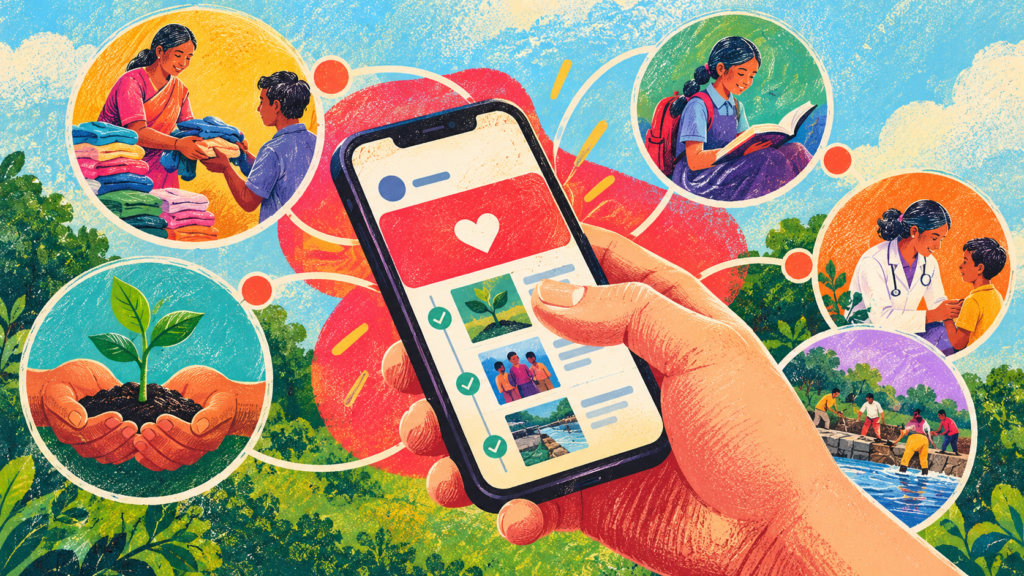
Instead of functioning like a regular donation platform, Blingo uses technology to connect donors, NGOs, and social causes in a more transparent way. Its goal is to make giving easier to track, easier to understand, and more connected to real outcomes.
This is important because donor fatigue is not always caused by a lack of care. Often, it happens because people feel disconnected from the impact. They donate once, receive a receipt, and then hear nothing meaningful after that.
Blingo tries to change this experience by showing people what their contribution is supporting. It helps connect social causes with different kinds of resources, including money, professional expertise, and physical inventory.
The stronger part of its model is impact tracking. When NGOs share updates, photos, milestones, and progress, donors know what to expect. They can see the ripple effect of what they supported.
This also helps smaller grassroots NGOs. Many smaller organizations do strong work but struggle to prove their impact in a polished way. With better technology and clearer reporting, they can build trust and compete for support more fairly.
Blingo shows that technology does not have to be cold or distant. When used well, it can make giving more human by making impact visible.
UnLtd India

A strong social idea can still fail if the founder does not have the right support.
Many people enter social work with passion, lived experience, and a real desire to solve a problem. But passion alone does not teach someone how to build a team, manage money, pitch to funders, create systems, or survive the early years of an organization.
This is the gap UnLtd India identified.
It understood that many social entrepreneurs were stuck in the “missing middle.” Their ideas were too early for large investors, too complex for regular charity support, and too fragile to survive without guidance.
UnLtd India stepped in as a support system for early-stage social entrepreneurs.
Its model is not just about funding. It provides seed support, coaching, mentorship, and access to networks. More importantly, it focuses on the person behind the idea.
That is what makes the model different.
Traditional investors often look at numbers, growth, and exit potential. UnLtd India looks at the founder’s ability to stay with the problem, learn, adapt, and build something sustainable.
This kind of support is crucial in the first few years. That is when around 10% of social ventures fail. The founder may understand the problem deeply but may not know how to create a stable business model around it.
Over the years, UnLtd India has supported social enterprises working across education, livelihoods, farming, climate action, gender equity, and other areas.
Yeh Ek Soch
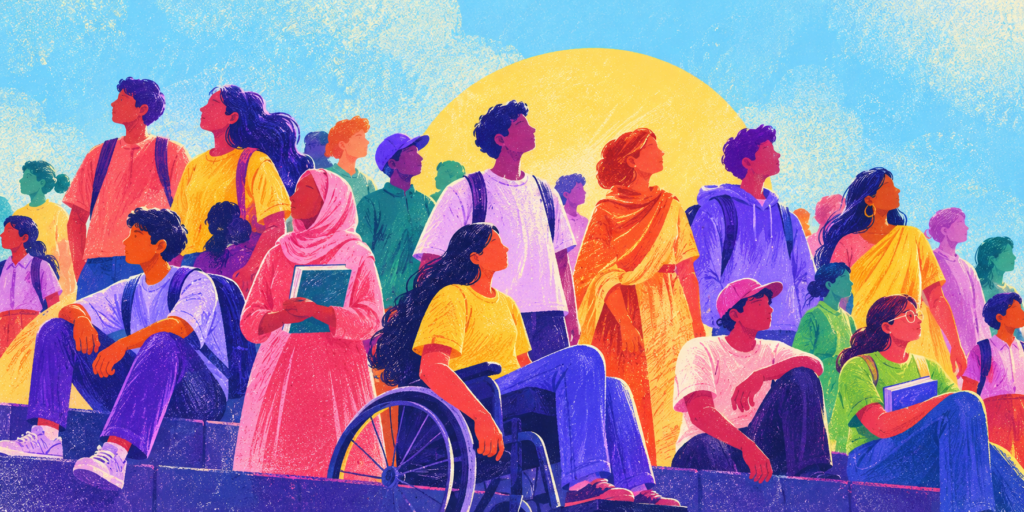
Yeh Ek Soch, also known as YES, focuses on young people from marginalized communities.
Its work is built on a clear understanding: exclusion does not happen only because someone lacks a skill. It often comes from caste, class, gender, disability, lack of access, and years of being told that certain spaces are not meant for them.
That is why YES does more than provide training.
It creates spaces where young people can build confidence, understand their rights, express themselves, and imagine a future beyond daily survival.
The organization has worked with vulnerable youth from a wide age range and focuses strongly on gender equity, inclusion, education, disability support, and youth leadership.
Its approach is not limited to employment. It is about self-belief, voice, and participation.
That matters because young people from marginalized backgrounds are often spoken for. Others tell their stories, define their needs, and plan their futures.
YES tries to shift that power.
It works to turn young people from beneficiaries into leaders in their own communities. This includes helping young women become digital literacy leaders, supporting inclusive education, and creating opportunities for people with disabilities to participate more fully.
One of its important areas of work has been connecting disability support with mainstream education. This includes creating more space for children with locomotor challenges through physiotherapeutic support and school-based inclusion.
The more profound message behind YES is that real change is not just about helping someone once. It is about giving people the confidence and tools to keep shaping their own lives.
The Common Thread
These five organizations work in very different areas.
But they all share one thing. They do not treat impact as a side project.
For them, social change is not something added later for branding. It is built into the model from the beginning.
That is what makes their work important.