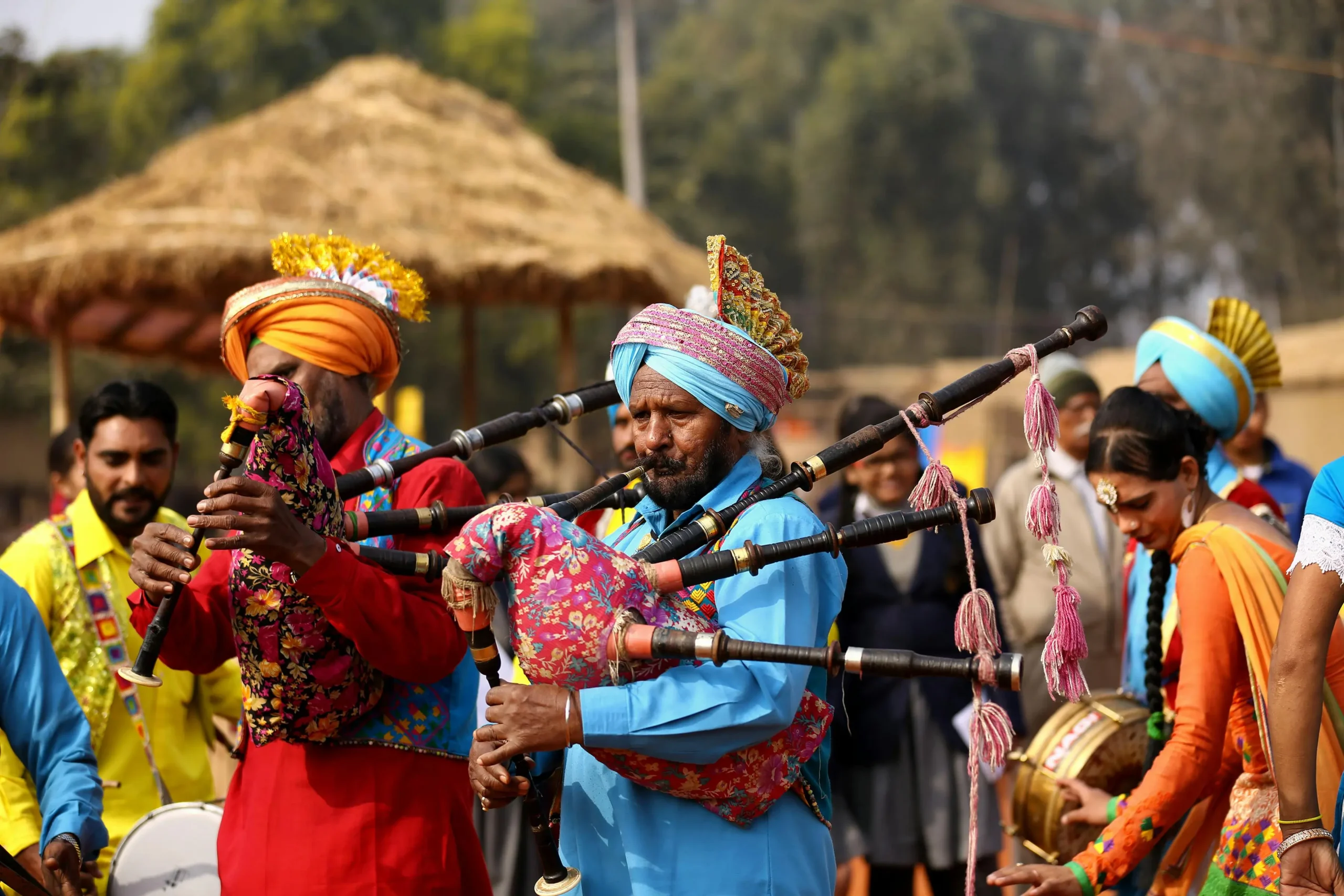
India doesn’t have one Holi; it has dozens. In Mathura and Vrindavan, people throw flowers and colours for over a week. In West Bengal, the same festival is called Dol Jatra, and it’s quieter, devotional, full of swinging Radha-Krishna idols draped in marigolds. In Rajasthan’s Jaipur, elephants join the procession. And down in Goa, Shigmo brings street parades that go late into the night.
The same spring, the same moon, and yet, every corner of this country finds a completely different way to celebrate it. That’s India for you. But of all the ways Holi gets reimagined across the subcontinent, nothing compares to what happens in Punjab. Punjab’s own Hola Mohalla!
The name comes from two words, “Hola” meaning warcry, or halla. Same festival, different power. “Mohalla” translates to a procession or a march. Combine them, and you have something of the order of the warrior march, and that is what it is.
Guru Gobind Singh Ji, the tenth Sikh Guru, started it in 1701 at Anandpur Sahib, Punjab. He had tried to give the Holi season a new meaning, not only in terms of colour and happiness, but also of power, discipline, and society. This is why, a day following Holi, he organized his people in mock battles, martial arts, poetry, and prayer. The tradition has not merely managed to stand the test of time, which is more than 300 years old. It has become one of the most fantastic festivals in the country.
Imagine a million people, the aroma of langar dal in the air, war drums beating, and a man standing on his two galloping horses upright. That is a Tuesday in Anandpur Sahib in Hola Mohalla.
Okay, But What Does It Really Feel Like? Let’s take you there.
The Nihang Sikhs come in, as the day is opening up, and they are a sight to see. Large turban heaps, two feet high. Deep blue and saffron orange robes. Curved swords at their sides. These are the warrior-saints of the Sikh tradition, and at Hola Mohalla the field belongs to them.
The performances of Gatka, the Sikh martial arts, are held in the open grounds. Swords are quicker than your eyes can follow. Mock duels with real weapons happen. Tent pegging on horseback as the riders drive a lance into a peg on the ground as they gallop. And then the scene that makes your mouth open: a Nihang, standing on the rump of two horses as they side by side, holding nothing, his arms wide open, and the colours streaming out of his hands into the people.
Breaking all these, somebody hands you a steel cup of chai. No one inquires about your name, your religion, or your caste. The langar, which is the free community kitchen, has been operating 24/7 and is prepared by volunteers and served to all people sitting together on the ground in long lines. Lentils, roti, kheer. The finest dinner you will take during the year, somehow.
The great procession commences in the evening, and is headed, as customary, by the Panj Pyaras, the Five Beloved Ones, in complete ceremonial armour, marching out of Takht Sri Keshgarh Sahib. There are thousands of followers. Drums, hymns, and flags named Nishan Sahibs and aimed towards the sky. The entire town is acting as a single body.
And why does it hit differently?
Holi gives you colour. Hola Mohalla gives you fire. It is not a festival as you observe it; it is one that draws you in. Its size, the combination of spirituality and sports, the presence of a complete stranger who gave you free food and smiled and meant it, is just out of order somewhere inside you.
Hundreds of festivals are held in India. But occasionally one of them cues you to the fact that there is more than joy in the very depth of celebration. It is all about keeping in mind who you are and what you represent. That is what Hola Mohal is doing, both silently and loudly simultaneously, during the last three hundred years. Should you ever have an opportunity to go, then go.