There was a time when romance felt strangely… analog. You’d spot someone reading a book in a coffee shop, or when someone would accidentally hold eye contact for one second too long in a grocery aisle. Or the situation when a friend of a friend would introduce you at a party, and suddenly, three hours disappeared into conversation.
Approaching someone felt terrifying, yes. However, it also felt real; rejection was awkward.
Chemistry was unpredictable.
And attraction? Messy.
Then smartphones arrived and did what they do best. They turned love into an interface, and suddenly, dating wasn’t about timing anymore. Or courage, or accidentally bumping into someone while reaching for the same overpriced croissant.
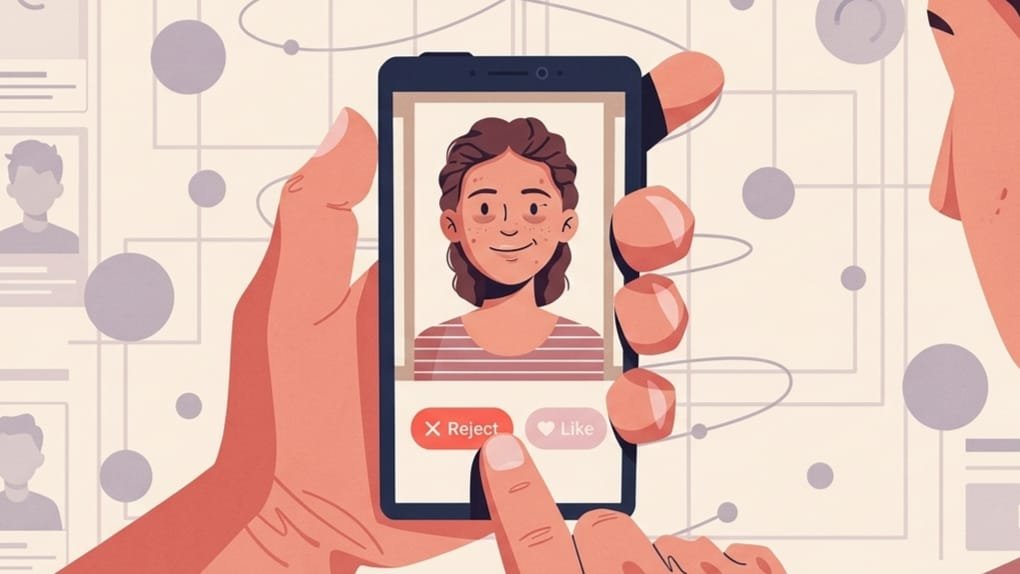
It became a game of thumbs.
Left.
Right.
Left.
Right.
And just like that, romance became a product. The swipe was genius when it arrived. Honestly, it felt revolutionary. Why awkwardly approach strangers when you could browse potential partners from your couch while eating chips in pajamas?
Dating apps promised abundance. More options, questionable compatibility, and somehow more control? No guesswork and, most importantly, what people are most afraid of: no public embarrassment. Just like doomscrolling, it became a game, a routine. I’m not going to lie, I was a victim; I guess everyone was, at a given point in time.
It felt like online shopping, but for a human connection. Efficient, personalized, and most importantly, fast.
And for a while, it seemed to work.
But now, something more intriguing is happening. Bumble – one of the biggest names in online dating – is trying to move away from the very thing that built modern dating apps:
The swipe. No more left or right.
The same mechanic that made apps addictive in the first place is now being used by dating apps, which discovered something uncomfortable along the way.
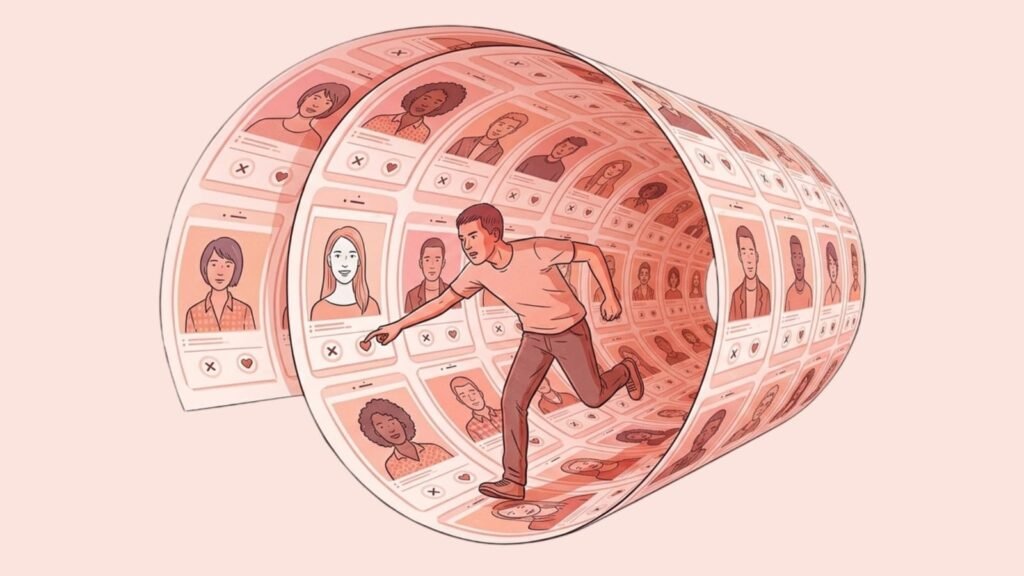
People are exhausted, not tired of love, maybe tired of the process that turned romance into infinite scrolling and tired of talking to twenty people and connecting with none. And LOL, people are tired of ghosting and being ghosted, too.
And there’s the strange emotional exhaustion of feeling both overexposed and deeply lonely.
“The swipe economy may finally be cracking.”
Just think about it.
Dating apps accidentally borrowed the psychology of social media. Short attention spans. Quick judgments, tiny dopamine rewards, and close to endless options. You weren’t meeting humans anymore.
You were consuming profiles. A face. A bio. A joke. A vacation picture.
Five seconds of judgment. Decision made. Next.
Love slowly started behaving like TikTok. Like another option, it was always someone hotter, someone funnier, just a better one or another way.
Honestly, nobody felt chosen.
Psychologists call this choice overload.
When humans are given too many options, satisfaction drops.
Ironically, we become worse decision-makers.
Just like Netflix, a surplus of options confuses us.
That should tell us something. Perhaps the problem was not access. Maybe it was abundance. The swipe turned romance into what economists would call an attention market.
Apps weren’t necessarily rewarded for helping you leave happily in love. They were rewarded for keeping you engaged.
Everyone knows someone who deleted dating apps, because maybe it was too exhausting Even one of my friends got really interested in the ”dating phase”, but of course even a car, driving with no destination, burns out too fast, he was no more interested and “too sure” about the dating pool, once he understood how it favours the system, and not his choices.
Modern dating became emotionally industrialized; you swipe during lunch and reply during meetings. Human connection became micro-content.
And Bumble seems to be realizing that maybe people don’t want endless options anymore. Maybe they want better ones.
The company has started experimenting with features that slow things down. Less emphasis on endless swiping. More focus on curated interactions.
In simpler words: Dating apps may be trying to move from quantity to quality, and if Bumble succeeds, the ripple effect could hit the entire industry.
This is a market shift story. If one giant platform proves people prefer slower, more meaningful matching, every major player will feel pressure. Apps like Tinder practically built an empire on swipe culture. The swipe is their DNA. It’s the slot machine of romance.
Removing that mechanic is like Instagram removing likes, because swiping is addictive. And addictive behavior keeps apps alive. The market reaction could split into two camps. One side may double down on speed, for faster matching and AI-generated icebreakers.
Dating as optimization software.
The other side may go in the opposite direction, toward slower dating and smaller match pools. Personality-first systems, even conversation-based discovery before photos, may be the answer.
But many people are addicted to the thrill of swiping.
Not dating. Swiping.
And if you think I’m exaggerating, there is a strange corner of the internet that accidentally proves the point.
Have you seen those viral YouTube speed-dating games?
The kind where people stand in a room, judge each other in seconds, reject someone with the press of a button, and move on before a sentence even finishes?
Yup! There’s one painfully popular format where contestants eliminate potential partners almost instantly based on first impressions, awkward one-liners, or whether someone said something slightly cringe. Watching it feels entertaining at first.
Then deeply uncomfortable, because if you think about it properly, it isn’t dating, it’s auditioning. Humans judging humans like reality-show contestants competing for some screen time in a stranger’s life, for what? A minute? Imagine the tension, the nervousness!
And somehow, millions of us watch it because it feels weirdly familiar. The format looks ridiculous, but it mirrors exactly what swipe culture trained us to do.
It almost feels like romance borrowed the mechanics of TikTok attention spans and game shows at the same time.
Honestly, the scary part is not that these videos exist.
You know why? Because swiping gives something sneaky: Validation.
You might not meet anyone. But matches feel good. Attention feels good. Being desired feels rewarding because the brain loves uncertainty. Maybe this next swipe is “the one.” That anticipation creates dopamine loops similar to gambling.
It’s why people keep scrolling even when they’re exhausted.
Hope is addictive, and this is where things start getting interesting.
Bumble is no longer pretending that the old system works perfectly.
Instead of simply giving users an endless conveyor belt of faces to approve or reject, the company is quietly experimenting with something that feels almost rebellious in today’s internet economy:
Slowing things down. The internet has spent the last 15 years optimizing for speed, making faster content, faster replies (maybe), faster shopping, and faster entertainment.
Bumble seems to have noticed.
Its newer direction hints at something very different: fewer but more thoughtful interactions. Less dopamine-fueled browsing. More deliberate connection.
Instead of treating attraction like speed dating, the platform appears to be nudging users toward slower decision-making.
And honestly, that sounds suspiciously close to how humans used to date before technology turned chemistry into an algorithm.
The psychology behind this shift is fascinating.
People don’t necessarily want more options anymore. They want better outcomes.
And if that shift works? The market implications could be massive.
Because Bumble is not a niche player experimenting in a corner. It’s one of the biggest names in digital dating. If users respond positively to slower, more intentional matching, competitors won’t ignore it.
And how do you think people will react to it? Imagine yourself seeing a screen that says, “These are the matches AI found for you.” Seems uncanny, doesn’t it? An episode out of Black Mirror (by the way, great series)
And why invest emotionally when another option is literally one thumb movement away? That mindset shaped modern relationships. Everyone started dating with one eye on the exit door, because what if someone better is still out there?
Bumble’s shift challenges that assumption, and maybe Bumble is betting that people are finally exhausted enough to want something different.
Will it work? Honestly, nobody knows.
Will it work? Honestly, nobody knows.
Humans are complicated like that.
But one assumption feels increasingly shaky: That romance should feel like infinite scrolling. Because somewhere along the way, we confused accessibility with connection.
And Bumble may be betting that the next era of dating isn’t about seeing more people. It’s about finally seeing people differently. Maybe it is now about seeing fewer people, but the right ones. But it’s just a maybe.
THE
GOODDAY POST
CREDITS
Mantra Chhabra
Author
Hassan
Editor
M Khizar
Editor
Dimpy Malviya
Contributor
Support Us
We believe happiness is contagious. Your support allows us to keep digging for the stories that restore faith and spark a smile.