I know what you’re thinking.
Have we, as humans, completely lost the plot?
First, we had AI girlfriends. Then, robot dogs were promised to replace real pets. Then, we saw humanoid robots doing backflips like they’re training for the Olympics.
And now?
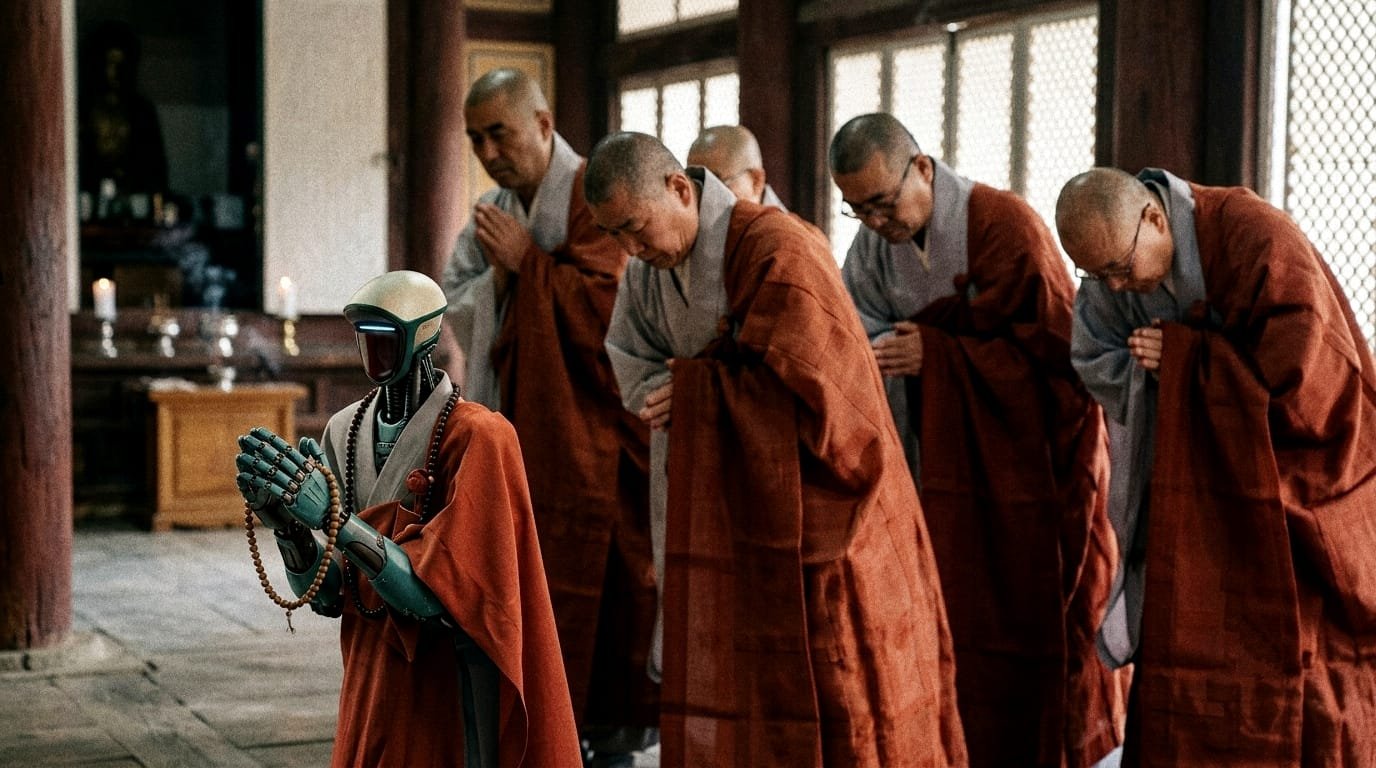
A Buddhist temple in Seoul just ordained a robot monk.
No, seriously.
Before you laugh, make a meme, and scroll away, I need you to understand something. This is not one of those weird “look how strange the future is” stories. This might actually be one of the most important cultural experiments happening right now.
Because for the first time in modern history, we are asking a question that sounds ridiculous… until suddenly it doesn’t feel so:
Can technology become spiritual?
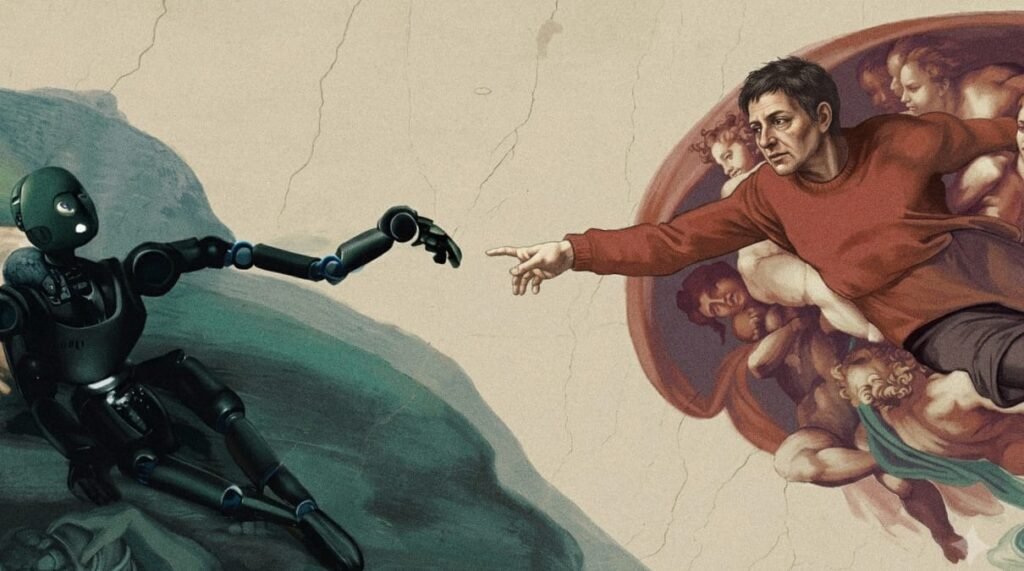
Or maybe the scarier question is:
Are humans becoming so disconnected that religion itself now needs an update?
Let’s talk about Seoul’s newest monk.
Its name is Gabi.
It doesn’t eat.
It doesn’t sleep.
It definitely doesn’t sit in silence, wondering if someone secretly hates it after sending a dry text.
But it bows.
It chants.
It delivers Buddhist teachings.
And in one of Seoul’s biggest Buddhist temples, it was introduced ahead of Buddha’s birthday celebrations as something far more serious than a publicity stunt.
Think of it like this:
For centuries (for simplicity), religion has mostly worked like old software: stable, based on belief in God, written by scholars and spread across the world. It has been reliable, deeply meaningful. But do you think that it has also been resistant to change? Like this robot is showing up in physical form, sitting through rituals, learning the traditions and ways around it. Going into the depths of something that is still being discovered by many scholars and scientists in the modern day.
That worked beautifully in a slower world.
But Gen Z?
They consume spirituality the same way they see, understand, and consume everything else:
Short-form. Interactive. On-demand.
Somewhere between therapy content, meditation apps, and oddly comforting 2 a.m. YouTube rabbit holes. Religion suddenly finds itself in the same position newspapers did when smartphones arrived.
Still valuable. Still respected.
But struggling to hold attention. And that is exactly where Gabi enters the chat.
in South Korea, organized religion has been quietly facing a participation problem. Younger generations are showing up less, questioning institutions more, and searching for meaning in entirely different places.
Some find it through self-help. Some through fitness. Some through productivity hacks disguised as philosophy. Others just doomscroll until existential dread kicks in.
So Buddhist leaders asked a question that honestly sounds like something a Silicon Valley startup would pitch over oat milk lattes:
“What if spirituality became more accessible?”
Not by replacing monks, but just by adding a new interface, because if you think properly, that’s what it is. It’s the “trendy” way of attracting the new generation towards spirituality. In the same way, ATMs didn’t replace banks. Spotify didn’t kill music. And smartphones didn’t erase human communication… they just changed how it happened.
Yes, there would still be many questions about how this is possible, but maybe fewer.
The robot monk can answer spiritual questions, recite teachings, and interact with younger visitors in ways traditional systems sometimes struggle to.
For some people, especially younger audiences, talking to a non-judgmental robot about anxiety or life questions weirdly feels easier than opening up to another person.
Which says something profound about modern loneliness.
But before we start acting like enlightenment has entered its chatbot era, we should probably talk about the uncomfortable stuff too.
Because spirituality isn’t customer service, and Buddhism, especially, raises a very awkward question.
Can something that has never suffered understand suffering?
A monk spends years confronting pain, desire, ego, attachment, and silence.
A robot?
It has never feared death, never experienced heartbreak, never stared at the ceiling at 3 a.m., wondering whether life is moving too fast.
It doesn’t suffer. And suffering is kind of Buddhism’s whole thing. It’s like asking a GPS to explain what getting lost emotionally feels like.
Technically smart. Emotionally… questionable.
Then comes the bigger fear.
What happens when convenience enters spirituality? Because convenience changes everything. Just like fast food changed eating in a restaurant, chilling and enjoying the ambience. OTT changed the feeling of sitting in a theatre and enjoying the movie.
And now?
Technology might be changing faith. Will future temples have subscription-style meditation bots?
Are AI monks available 24/7? Personalised spiritual advice based on your mood history?
Imagine getting a notification saying:
“Your stress levels seem high. Time for guided detachment.”
Sounds soooo dystopian.
Also sounds weirdly possible, but there’s another way to look at this. Maybe Seoul isn’t replacing faith. Maybe it’s trying to preserve it by rebranding it according to the new standards the world has provided them with
Every generation updates the way wisdom gets delivered.
Books became podcasts.
Teachers became creators.
Libraries became search engines.
So maybe temples are simply experimenting too.
Because if ancient wisdom refuses to adapt, younger generations don’t necessarily return. They will leave, which is also caused by how little attention we are giving to everything today. We aren’t thinking deeply about something or someone. If it demands too much, leave or better just take advantage for a while and wait for it to leave on its own. Quietly, permanently.
The truth is, we’re entering a strange era where humanity is no longer just outsourcing labour to machines. We are beginning to outsource parts of emotional life.
Therapy, companionship, creativity, and now, maybe even spiritual guidance.
That should excite you a little, and concern you a little too.
Because while a robot monk may answer your questions, it still cannot sit with grief the way another human can. It cannot understand suffering. Only simulate understanding.
And maybe that difference matters more than we think.
Or maybe, 20 years from now, this article will feel as outdated as people once laughing at online shopping.
We really don’t know.
Maybe future temples will have both:
Human monks. Robot monks. Side by side.
Ancient wisdom running on modern hardware, or maybe we’ll eventually realise the real magic of spirituality was never the teacher.
It was the very human messiness of trying to understand ourselves together. Either way, one thing is becoming clear. The future is not just arriving in our phones anymore. It’s quietly entering our temples, too. And nobody really knows what happens next.