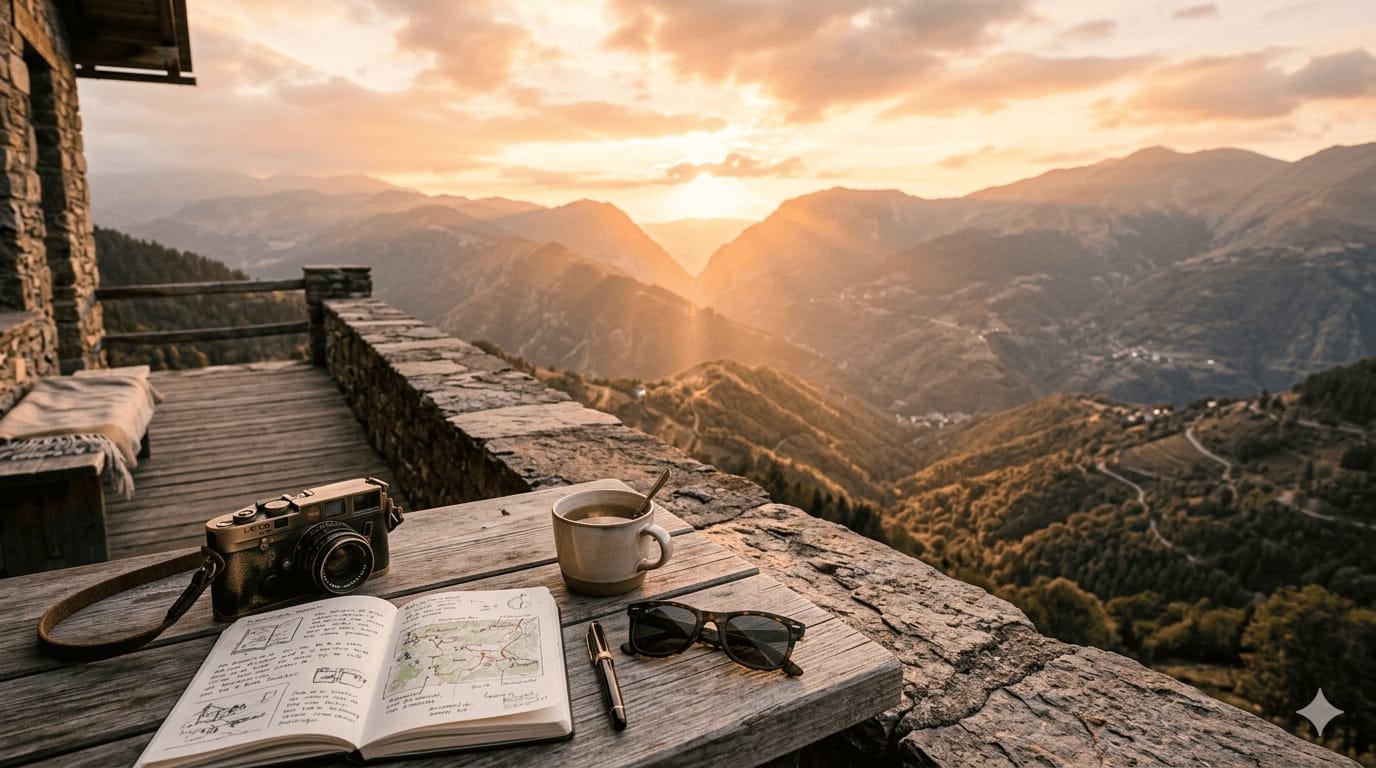
I’d like to ask you a quick question: Is this world a good place to be? You won’t know for sure until you leave your city. Every part of this world has its own story, feeling, and point of view that needs to be told. Paris is not like Tokyo. Mumbai doesn’t have the same air as New York. You can only feel the rhythm and heartbeat of a place when you’re there, breathing its air and walking its streets.
Here’s an unpopular opinion you didn’t ask for: we humans were never meant to live in one place for the rest of our lives. If you look back far enough in our history, you’ll see that we used to be travelers and hunter-gatherers who followed the seasons in search of food, water, and good weather. Our ancestors had no permanent homes, and no idea what a lease or a mortgage was. They followed the herds, the rain, and the sun. So when did we stop? When did we decide that having a roof and four walls was more important than having a view?
I want to tell you about someone who made me think about what we’ve lost. There is a director at my company who is about sixty years old. This guy has been all over the world, and I don’t mean just the usual places like Germany or Italy. I mean Peru, where he might have hiked through old Incan ruins and eaten ceviche with people who didn’t speak much English. Colombia, where he must have walked through the colorful streets of Cartagena and learned about a country that is much more than what you see on the news. Places that most people wouldn’t even know how to find on a map.
What really stands out to me is how smart he is. He has one of the most creative and open minds I’ve ever seen. When everyone else is stuck in the box during meetings, he’s already three steps ahead, making connections that no one else can see. He likes art, not just as a viewer, but also because he knows why a painting is important and why a sculpture can make you cry. He loves new technology and is always the first to try something new. He also has an insatiable curiosity and asks questions that make you question everything you thought you knew.
Even though he’s older than me, he has a charm and energy that a lot of people my age don’t have. I’ve seen people in their twenties who are already tired of life and are just scrolling through their phones. Then there’s this man in his sixties who gets excited when he talks about his next trip, project, or idea. He fits in with Generation X, but I think he belongs to our generation. He might even be past it.
You may have seen this pattern yourself. People who have really traveled the world are often the most humble. They’ve been to the Grand Canyon and felt how small they are. They’ve walked through the slums of Mumbai and seen how small their problems are. They’ve met people they didn’t know in hostels who changed their minds with just one conversation. These people act like they don’t know anything, even though they have a lot of experience and knowledge.
At the same time, people who haven’t pushed themselves out of their comfort zones very much often think they know everything. They talk about politics without ever meeting anyone from the other side. They use movies and stereotypes to judge whole cultures. They want to tell you how the world works, even though their world is only ten miles around their house.

The last few years have made this undeniable to me.
It makes me sad that so many of us have problems that could be avoided. I’m not different. When I’m anxious, I lie awake replaying conversations that don’t matter. When I hit a creative block, I can spend hours staring at a blank page. Some days, a quiet heaviness follows me everywhere, like I’m walking through mud.
But lately I’ve realized that if I stayed involved, kept moving, and kept exploring, a lot of this wouldn’t exist. This is based on real science. Studies have shown that traveling lowers cortisol levels, which is a hormone that can hurt your body. When you try to find your way around a new city, order food in a language you don’t know, or figure out how to use public transportation, your brain makes new neural pathways. Your brain actually rewires itself.
And here’s where it gets real, we are not talking about some luxury hobby or a nice-to-have weekend getaway. You know what’s my mindset now; that travel must not be someone’s hobby, but a need for emotional and mental survival. And the best part is that, when you realize the importance of adventure, nature, and this planet, it rewards you back with a treat. Not a treat to swallow and forget about it, but a treat to savor slowly, enjoy its flavors, and realize what you have been missing till now.
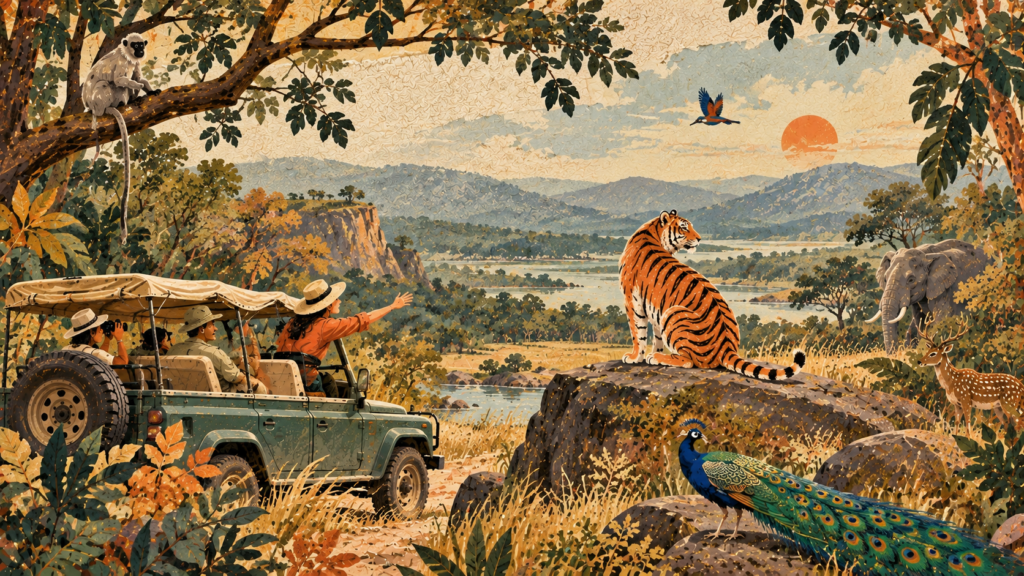
This planet doesn’t play small. The bright orange sunsets of Kenya, the Great Barrier Reef, which is home to creatures from fantasy books, or the thin air in Nepal that make your lungs beg to stop; all these things are something that can teach you what life is, and why it only exists on our planet Earth.
Apart from nature’s marvels, we, humans, have also left legacies. By the time he was thirty, Alexander had conquered many countries, Genghis Khan ruled over from Korea to Hungary. Just imagine what these guys would have been through while mapping the whole planet on their horses.
And then there’s you. Sometimes, even your friends might not notice you in a crowd, and you might feel small and alone. You may have felt like no one saw you at parties, work, or group chats.
But the truth is that what’s inside you really matters. Not in a physical way, of course, but in every other way that matters. You have dreams that keep you up at night. You have thoughts that could change someone’s life. You have a lot of potential that is just waiting to be used. The problem is that it’s hard to see that potential when you live in the same place, walk the same streets, and do the same things every day.
Traveling doesn’t just show you the world; it also shows you who you are. It takes away what you know and makes you change. When you go to a new city by yourself, you find out how brave you are. When you miss a train and have to come up with a plan B, you learn how resourceful you are. When a stranger helps you without expecting anything in return, you learn how open-hearted you can be.
It makes you remember that you are a part of something much bigger than your job title, your Instagram followers, or your relationship status.
Staying in one place is a choice that quietly takes away from us. It makes us think that our problems are the biggest in the world. It stops us from being creative because new experiences are what give us ideas, not the same four walls. It takes away our sense of wonder, which is the childlike awe we feel when we see something beautiful, strange, or out of the blue.
I think about that director sometimes. The sixty-year-old man who has more life in him than people half his age. I’ve never asked him how he felt about traveling. What was he thinking about at Machu Picchu, or what was he thinking when he tried ceviche at a street market in Lima, or what did he learn about himself when everything was new?
But I don’t need to ask him all these things. Those answers aren’t his to give; they’re for me to find, and also for you. You need to find out how it feels to step into a completely new world, where you know nobody, and nobody knows you.
What will you think when you get off that plane? How will your POV change when you meet someone who lives a life completely different from yours, maybe easier, or a more difficult life than yours? This is the questions that will chase you once you start traveling. The world is waiting; there are things it can teach you that no book or movie can.
People who travel a lot don’t just learn more, they laugh harder, cry harder, and get along better.
Maybe that’s what my company’s director figured out a long time ago.
It’s your turn now.