
There is a strange kind of silence before the world changes.
The US dollar kept that silence intact for decades. Following World War II, the dollar became the world’s trading system. If a country wanted to buy oil, sell wheat, move ships, or trade technology, it usually had to go through the same system: the Federal Reserve, SWIFT, and the Western-controlled banking rails.
However, by 2026, the system began to feel unstable.
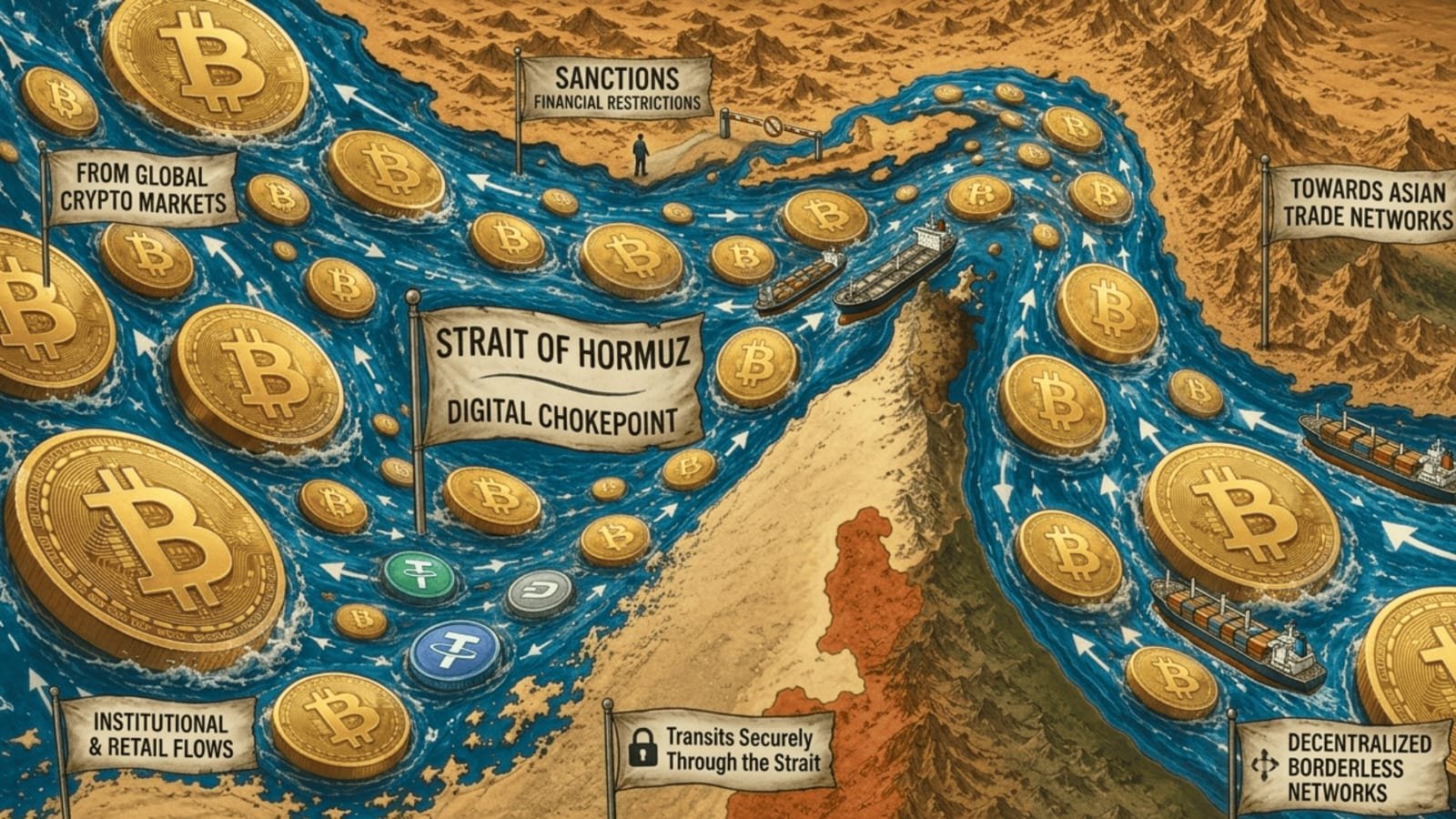
This trend was most visible in the Strait of Hormuz.
This narrow body of water has always been important. Around one-fifth of the world’s oil supply flows through it. So when tanker traffic slowed in early 2026 due to renewed tensions in the Gulf, the world took notice. Insurance costs have risen. Some ships rescheduled their routes. Some returned. Others waited for instructions that were occasionally unclear.
Then came the part that made everyone uncomfortable.
Iran had effectively turned the Strait of Hormuz into a digital toll booth.
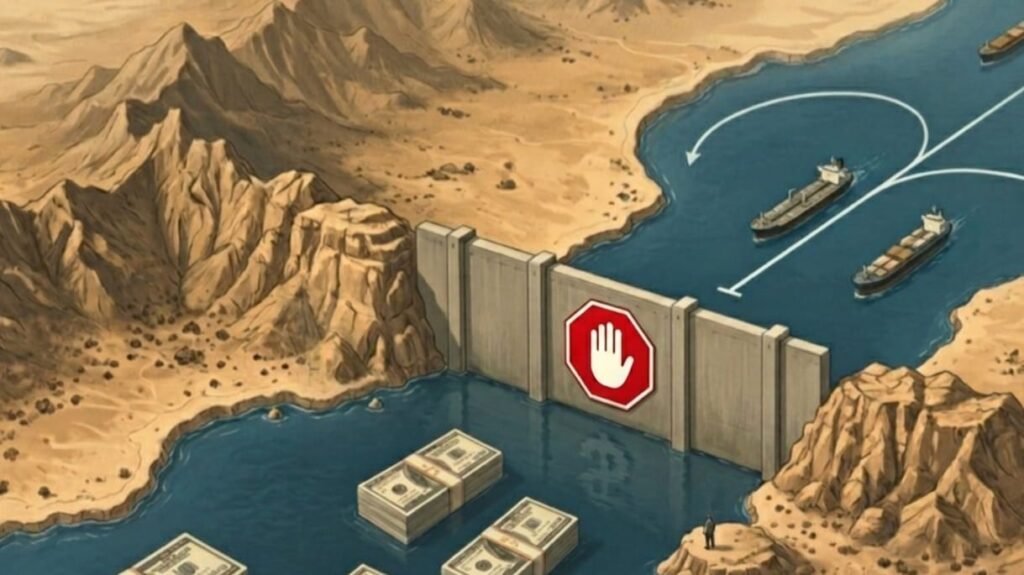
But the arrangement was not a neat, official toll system with forms, receipts, and international approval. It was more than that. There was no universally acknowledged process. No visible maritime deal. No clean payment portal. Instead, a shadow system developed where some operators paid, some refused, and many sought negotiations through unofficial channels.
It was not always a political decision for the shipping companies. Sometimes it was simply math. A delay could cost millions. Rerouting could cost more. So, for some operators, paying a controversial fee started to look less like an agreement and more like survival.
And the payment was not always made through banks.
It was possible with stablecoins like USDT. In some cases it might travel through yuan-based systems.
In other words, you may not need to wire money to access one of the world’s most important oil routes. You may need a transaction hash.
Of course, the real process wasn’t quite so smooth.
Vessels, insurers, or operators often passed through a negotiation layer before entering the strait. Not via a public website, but through brokers, regional contacts, and unofficial middlemen who had learned quickly how to turn geopolitical risk into a payment process.
The terms were agreed upon, and the money paid up front. Confirmation then passed back through the same foggy network. That confirmation was like a clearance signal.
But nothing was certain yet.
In April, reports emerged that wallet addresses claiming to be authorized provided several vessels with unofficial payment instructions. Some paid. But some were still caught. It is particularly challenging to prove whether it was the fraud, the confusion, the duplication, or the internal miscommunication.
And honestly, that is the bigger story here.
This is not about perfect control. It is about contested control.
A system can be unstable and still work. It can be unofficial and still collect money. It can be risky and still become part of global trade.
That is why this moment matters.
This time, it became a tool for the survival of the state. It became a way for a sanctioned country to extract value from the very system that was meant to keep it out.
To understand how we got here, we need to look at the pressure behind it.
The dollar has been a powerful weapon in the U.S. economic arsenal for years. It can isolate countries, companies, and individuals from the global financial system through sanctions and the Treasury’s OFAC(Office of Foreign Assets Control) system. If you can’t get dollars cleared, work with banks, or get into international payment systems, you will pretty much shut yourself out of world trade.
This pressure on Iran has built up over many years. It has been the result of years of nuclear tensions, regional conflict, sanctions, counter-sanctions, and failed negotiations. They wanted to limit Iran’s power without direct war. But pressure always has side effects.
And one of those side effects was this: Iran was forced to develop ways to operate outside the system.
By the early 2020s, Iran had become largely cut off from traditional finance. Its money had gotten fragile. Inflation wore ordinary people down. Most big banks did not want to risk US penalties, so it was difficult for them to move oil exports openly.
Try running a country where your main source of income gets blocked, watched, or frozen. And then, at some point, survival breeds creativity.
Iran did not turn to crypto because it wanted to look modern. It turned to crypto because the regular system had become almost impossible to use.
And this shift did not happen suddenly.
It was among the first governments to formally recognize crypto mining as an industrial activity in 2019. But there was one proviso. Miners could run on Iran’s cheap energy, but the Bitcoin they mined had to be sold to the Central Bank of Iran.
That was the beginning of what you could call a sovereign mining engine.
Iran was using domestic energy, which was hard to export openly, and converting it into digital money that could cross borders. It was more than just buying crypto. Making out.
Estimates indicated that by 2024, Iran had become a meaningful player in global Bitcoin mining. Mining wasn’t even the important part. And then came what happened next.
The Central Bank did not see Bitcoin as a trophy asset on a balance sheet. It treated it as fuel. It was something that could be moved through intermediaries, traded on OTC desks, and used within import channels that did not rely on Western banks.
TTWhat developed was not a normal currency system.
It was a parallel clearing system.
This system refused to seek permission from the same institutions that had shut Iran out.
The Strait of Hormuz toll system was the next part of that strategy. By mid-March 2026, Iran reportedly had finalized its “Strait of Hormuz Management Plan.” The IRGC (Islamic Revolutionary Guard Corps) began charging so-called environmental and security fees on ships passing through the strait.
The fee could reportedly amount to up to $2 million per vessel. Payment could be made using Bitcoin, USDT or Chinese yuan via CIPS.
The message was clear. If Iran could not freely enter the global banking system, it would create a toll point in the water and accept payment through systems that were harder to block.
Naturally, the United States did not ignore this development.
As these payments reportedly grew, the US responded with what became known as Operation Economic Fury. This is where the conflict started looking less like a traditional military standoff and more like a digital financial war.
The new front line was not only in the sea. It was also on blockchain ledgers, exchange accounts, wallets, and transaction trails.
US agencies began tracking, freezing, and disrupting digital assets linked to Iranian networks. In April 2026, the US reportedly intercepted or froze hundreds of millions of dollars in digital assets tied to Iranian front companies.
But crypto creates a difficult problem for enforcement.
You can block one wallet, and another can appear. You can trace one path, and the money can move through mixers, chain-hopping, small exchanges, decentralized protocols, and intermediaries in different regions.
It becomes a cat-and-mouse game.
Every time one address is blacklisted, another address can be created. Every time one route is watched, another route can open. The system is not invisible, but it is flexible.
That is what makes this situation so important.
It shows how technology can move faster than policy. Governments can still act, but they are no longer dealing with one bank, one account, or one wire transfer. They are dealing with a network that can shift shape.
So what does this scenario mean for crypto?
Some people may look at these developments and say crypto has finally proved its value. And in one sense, that is true. If a nation-state uses Bitcoin or stablecoins to move value under pressure, then crypto is clearly more than internet money or a speculative trade.
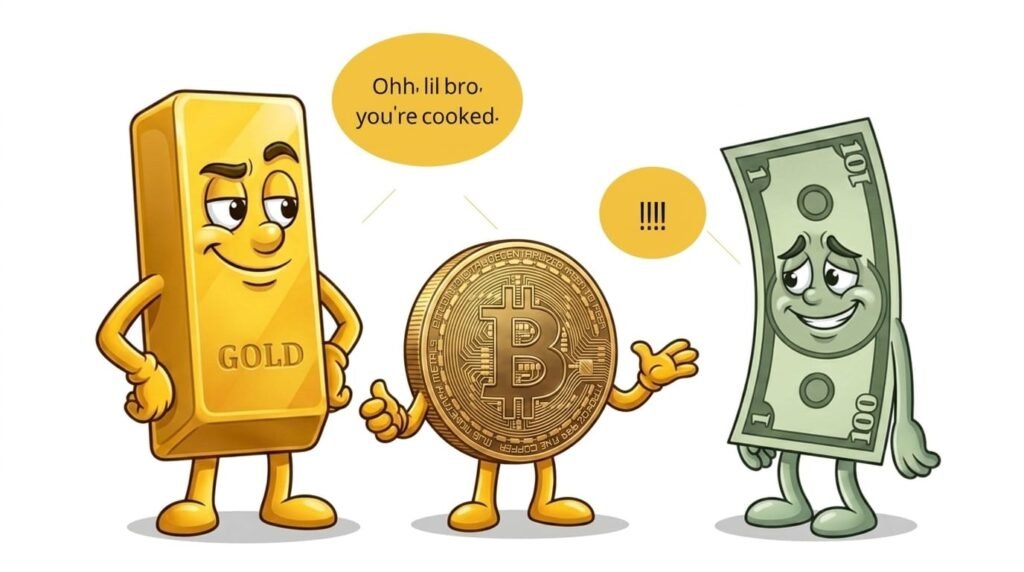
It has real utility.
But that does not mean it brings stability.
Actually, it may bring more regulation, more fear, and more conflict. The moment crypto becomes useful for countries trying to avoid sanctions, it also becomes a bigger target for governments that want to control financial flows.
Central banks will push harder for CBDCs. Regulators will become more aggressive with exchanges. Private wallets may face tighter scrutiny. Stablecoin issuers will be pressured to freeze more assets and monitor more transactions.
So the future may not be one clean system replacing another.
It may become a divided world.
This system will be regulated and monitored, making it safer for institutions, but it will be controlled by politics and sanctions.
On the other side is the sovereign ledger. This ledger is riskier, harder to control, and is used by states, traders, survival networks, and anyone trying to move value outside traditional rails.
Most people will likely spend their lives between the two worlds and not even know it.
That’s the point where the average investor has to be wary.
Using crypto for survival trade is a strong signal from a country. It demonstrates that the technology has become too important to ignore. But it is also a red flag.
Buying crypto today is not just gambling on technology. It’s also a bet on regulation, geopolitics, sanctions, and the war between governments and decentralized systems.
The biggest risk is probably not that Bitcoin disappears. Things like this prove it’s too useful for too many people for that.
The bigger danger is secondary exposure.
You may not be doing anything wrong. But what happens if the liquidity that flowed through your exchange was through a sanctioned wallet three transactions ago? What if an exchange freezes accounts due to regulators investigating a chain of payments? What if states go to war with each other and retail investors get caught in the crossfire?
That’s the problematic bit.
Crypto was once seen as pretend money for internet groups, traders, and tech true believers. That time has passed.
The Strait of Hormuz has made clear that now code can live within national security, trade routes, sanctions, and oil markets.
The Strait is no longer just a physical chokepoint. It has become a digital one as well.
“And in this new world, the one who controls the ledger may be as powerful as the one who controls the sea.”