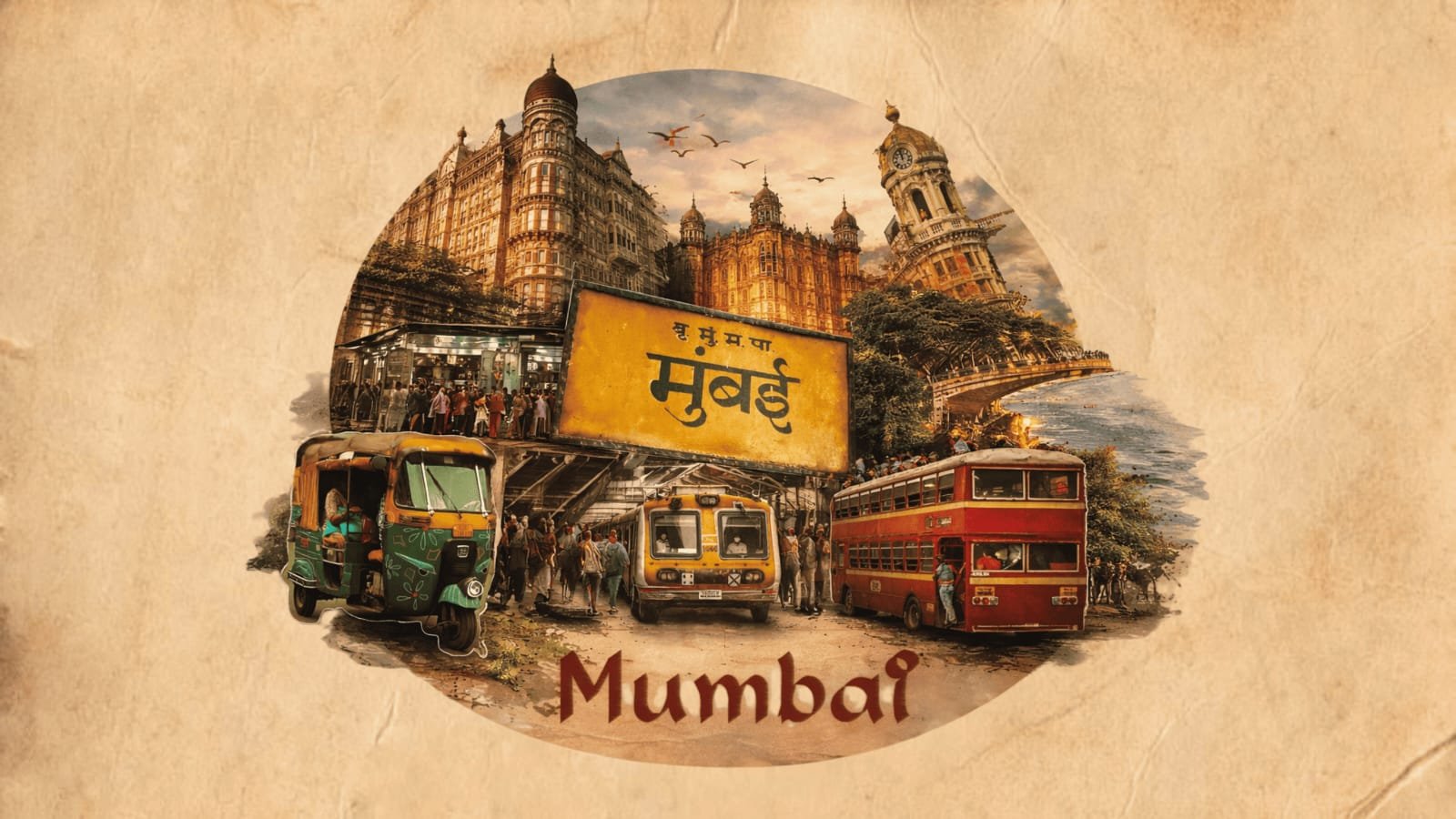
A lot of my friends have lived in Mumbai long enough to know that if a train stops for more than thirty seconds between stations, at least three people will look up at the sky like they are going to talk to God.
That’s the spirit of the city of dreams.
A few months ago, I also moved to this city that is strangely magical. I saw a man get on a Churchgate fast at 9 in the morning using only timing and trust. And believe me when I say this: he didn’t “get in”; he was absorbed. Someone else’s backpack in his spine, and a stranger’s elbow was in his ribs, but everyone was fine with it.
And this is one of the many magical things about the happiest city in Asia.
According to Time Out’s 2025 City Life Index, Mumbai is the happiest city in Asia. 94% of people who live there say the city makes them happy, 89% say they’re happier here than anywhere else, and 88% say it’s a good place to live.
In writing, that sounds like satire, because in this city, rent for a 1BHK in localities like Bandra or Andheri can easily eat up ₹50,000 a month, and the fridge and bed are basically in a long-distance relationship. My friend has this kind of flat, and she still calls it “cute,” even though she pays more for it than her parents do for their whole house back home.
The sky opens up every July, and we all act like we’re ready for it. Floods make it hard to get to work on time. Traffic deaths are still a very real problem. Lanes are just suggestions for how to decorate the roads, but when someone asks, “Are you happy here?” most of us say yes right away.
At first, I didn’t believe the numbers, so I started to pay attention. One time, while I was waiting for the bus near Lower Parel, I talked to Uncle Ramesh, who is a dabbawalah. Uncle said that for twenty years, he has delivered hundreds of tiffins every day and has never been late. “Train late ho sakti hai,” he said with a shrug, “par main nahi.” There was more pride in his voice than in a character playing a king in a play. When the city feels crazy, accuracy becomes personal. There’s a 23-year-old designer I know who lives in Malad with two other people and a ceiling fan that sounds like it’s complaining; she has to pay ₹22,000 for her own space. She said, “I come home at 11 PM, and no one asks me questions.” Even though the freedom is limited, it’s still freedom.
There is also a retired teacher in Dadar who goes to Shivaji Park every morning, as if it is his office. Same time and same bench. He says that the wind helps his blood pressure more than any doctor, so he goes to the park every day now. No consultation fee, just air and consistency.
To bring contrast to this unofficial research, I also decided to meet someone who didn’t dream about this city of dreams. There was a 19-year-old boy who came from UP with just one bag and slept on a platform for two weeks. He said this way of life was hard, and why wouldn’t he? But he talked about the first time the train doors opened, and he stepped into the city as if it were a real possibility. Hard life? Yes, but harder will.
I’ve messed up interviews, relationships, and creative ideas here, too. Mumbai doesn’t stop to comfort you; it just gives you a vada pav and moves on, and surprisingly, that bread and fried potato mash actually helps. What interests me is that cities like Seoul, Singapore, and Tokyo, which are cleaner, richer, and smoother, are lower on the same index. Analysts say that longer hours and stress in cities are to blame.
What are our hours? We don’t clock out in peace, and our trips to work are like sports events. Our stress has a personality, but that’s what makes it different.
The MRT in Singapore always comes when it says it will. The system works like a machine that has been perfectly set up. Whereas, the 8:42 local train in Mumbai might not show up until 8:47 because of rain, bad signals, or fate. You don’t do business in this city; you use it.
It fights back.
It shocks you.
It makes things harder for you.
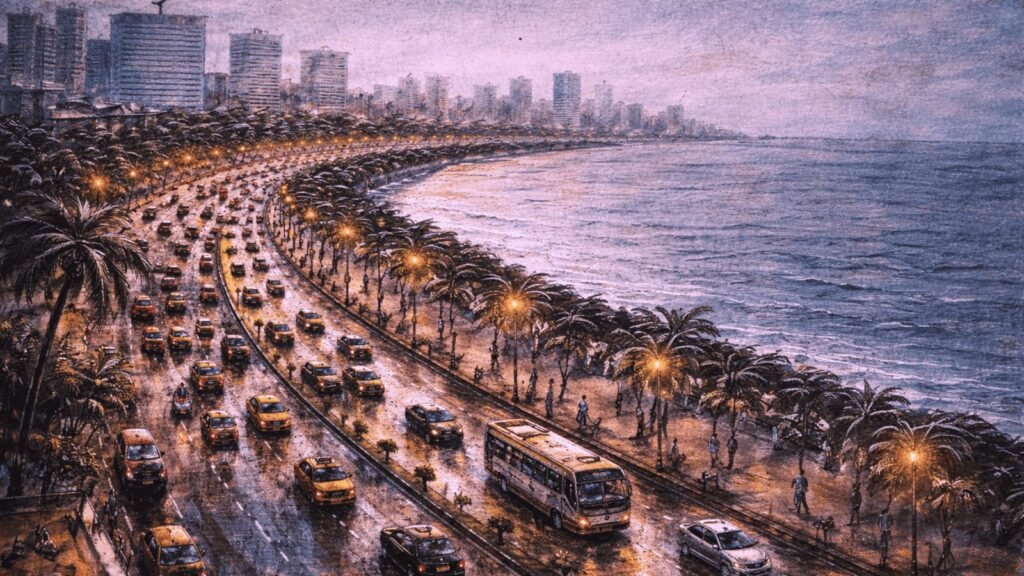
And then, on a random Tuesday night at Marine Drive, it makes you feel like you’re right where you should be. The more I have lived in this city, the more I don’t see suffocation when I think about that 9 AM local. The pothole that won’t go away? Yes, it’s annoying, but look at how traffic moves around it like water finding a way. The ₹15 vada pav I eat standing near the station tastes better because I worked hard for it by living here for another day.
Here, I am not writing to glorify the bad system, infrastructure, or hustle culture. Instead, I want you to live and observe it, just like I’m living it. Because, as our young generation is noticing and raising these issues, that day isn’t far when the Mumbai local will also be in news headlines, competing on punctuality with Japan.
That is what the survey found out: neither comfort nor perfection. It’s just the strange, electric feeling of being in a place that is always moving and pulling you along, whether you’re ready or not.
I always complain about Mumbai.
I can’t picture being bored in it either.
If being happy at 22 means never feeling like you don’t matter, then yes, I get the number.