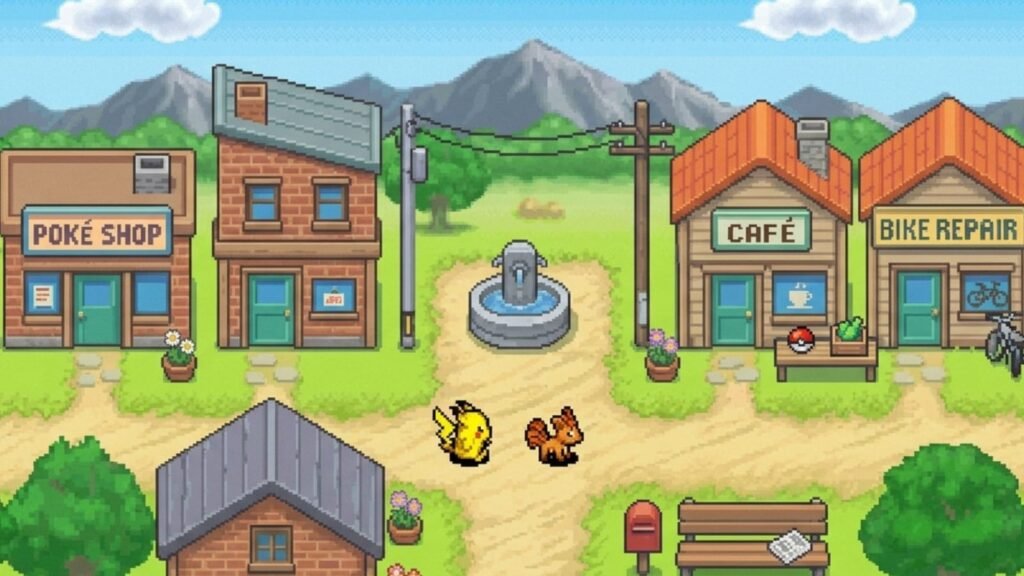
The social media trends suggest it’s 2016 all over again, bringing back the nostalgia, and the brands are on it, too. So we thought, why not mention one of the most exciting things that happened in 2016? POKEMON GO!!
Yup, that internet sensation that turned teenagers, even people of our parents’ age, on the roads, their eyes glued to their phones trying to catch Pikachu, Complete Zygarde, Mega Rayquaza, and of course our favourite JIGGLYPUFF! Parks used to be full at midnight, meetings got pushed, strangers actually talked, and people actually socialised. Office workers took long lunch breaks, and most shockingly, teenagers walked for ten kilometers without any complaints.
It felt like the future was here; I myself socialised so much. I, for instance, knew what was going on in someone’s house, living 8 blocks away, don’t take me up for a creep, but you also love gossip. All of this is because of one game, Pokémon Go.
Pokémon Go’s developer, Niantic, made a similar AR game before this, Ingress Prime. Now, this game was released before Pokémon Go; this game was more complex, strategic, and a bit mysterious. And it literally turned cities into battlegrounds, as players captured portals tied to real-world landmarks.
Trust me when I say this: Ingress has a cult following, but Pokémon Go was different. It was nostalgic and friendly. It was simple, nothing of the sci-fi lore, it literally said “Walk outside, find a Pikachu” (I laughed so much at this), and we actually did.
This type of gaming not only excites us, but it was one of the games that forced us to move out of our beds, our rooms, and play outside. It actually was kind of healthy. I say kind of because it did result in some serious and tragic accidents, but let’s not go there. We’re here to reminisce about something else. It actually blended into our lives, not the other way around. Our neighbourhood became a Pokéstop, a local statue became a portal, and a daily commute became a quest.
It didn’t isolate people; it helped people to move outside.
The Internet was flooded with people sharing stories about how they met some strangers at the gym (it was for Pokémon, not real people) who became friends. Businesses saw increased foot traffic, and cities saw crowds forming around rare Pokémon spawns. It brought humanity together; it wasn’t seen as a game anymore, but a social event. Intellectuals and opportunistic people started funding businesses in the AR segments, and not gonna lie, there was a scope after what people saw and experienced.
Pokémon Go generated over $200 million in its first month. At its absolute peak, the game earned around $10 million per day. It remained profitable for years and eventually crossed billions in lifetime revenue.
You might want to hold down to your chair a bit hard because the fact that I am going to state now is going to be devastating. Without a release in China, the world’s largest smartphone market, this game earned $35 billion combined in 2016-2017 from both IOS and android’s downloades. That was so much faster than some billion-dollar games like Candy Crush Saga and Puzzles & Dragons.
This was the time when the game peaked! But the universe had other plans.
People recognised this game worked in a loop, catching a Charizard felt special the first time, but it didn’t the 200th time. Ingress faced the same issue; its strategic depth was impressive, but it required significant commitment, and casual gamers found it intimidating.
The major turning point came in 2019; the momentum was slowed, the hype of launching new features faded, and the media got bored, too.
COVID hit, lockdown began, parks closed, streets emptied, and social gatherings stopped. Niantic quickly tried to keep up with the trends, allowing players to raid remotely, trying to keep the community active, but the core magic faded in no time. The physical experience, blending with the digital one, couldn’t survive in living rooms. Because of the pandemic, AR gaming’s greatest strength became its biggest weakness. Console games grew, streaming exploded, and then it was time for battle royale games to outshine and let Pokémon Go rest in the hall of fame.
So the main question arises: Is the game dead for real now?
To be honest, not really, it is active, generates revenue due to its loyal player base, but it no longer dominates the headlines, or it no longer feels like the future of gaming. COVID really shifted the people’s perspective, reshaped it, and rebranded it.
Although the expectations were high, it was to replace traditional gaming, making entire cities into permanent digital playgrounds.
But hey, parting is a sweet sorrow, as Shakespeare said.
Now, AR gaming is kind of on the shelves right now, eating earth’s dust. Maybe it was way ahead of its time, maybe we will see something in the coming years, and I genuinely wish this game gets that type of recognition again. Come on, we are in 2026, we have humanoids coming soon, AR must be the next thing, or as I wish.
Now AR is being used in other ways possible, like the Vision Pro by Apple, the Meta Quest Pro, or the Samsung XR. It is still pretty fun to make anything in your bedroom, or in your house, with your hands, without hurting yourself or calling the carpenter over and over and becoming their regular client.
But what Pokémon Go left us with?
A lot about AR, because people do learn from games, we learned that it created a moment, a moment that filled parks at midnight, making friends without judging how much they make or how they live. But moments don’t last forever, but they leave marks that live forever, and sometimes, that’s enough to remind us what might still be possible.